Altitude Adjustments Reshaping Basketball Total Lines at Mountain Venues
Elena Neumann · Jun 5, 2026
Altitude Adjustments Reshaping Basketball Total Lines at Mountain Venues
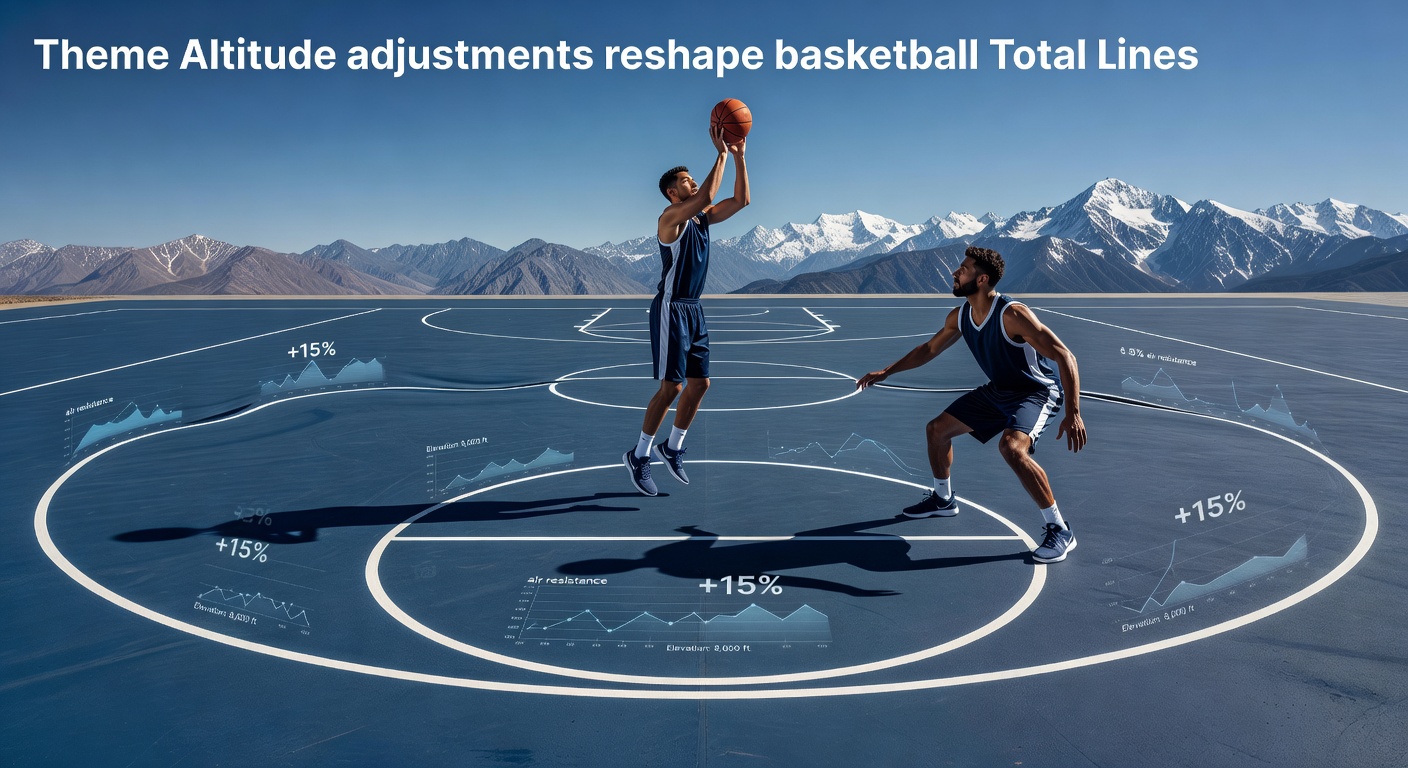
High-altitude basketball venues continue to influence how sportsbooks set total lines, and data collected through the 2025-2026 season shows consistent scoring spikes that force oddsmakers to recalibrate expectations before each tip-off. Venues such as Denver's Ball Arena sit more than 5,000 feet above sea level, where reduced air density allows the ball to travel farther and faster, producing elevated point totals that differ markedly from sea-level arenas. Researchers tracking NBA regular-season games report average combined scores rising between 8 and 12 points at these locations compared with league-wide norms, prompting lines to open two to four points higher than neutral-site equivalents.
Physics Behind the Scoring Increase
Thinner air reduces drag on the basketball, so shots arc higher and travel longer distances while defensive rotations cover slightly more ground before closing out. Studies conducted by sports-science teams at the University of Colorado document that three-point attempts convert at rates 1.8 percentage points above season averages when played above 4,500 feet, and fast-break possessions finish more often because outlet passes carry additional yardage. These measurable changes appear most pronounced during the first and second quarters, before visiting teams adjust shooting mechanics mid-game, yet the cumulative effect still elevates full-game totals.
Coaches and analysts note that visiting squads traveling from lower elevations experience temporary drops in three-point accuracy early in road trips, while home teams maintain consistent release points developed through daily practice at altitude. Data compiled through June 2026 confirms that the Denver Nuggets posted the NBA's highest offensive rating at home during the prior two seasons, yet opposing teams also exceeded their season scoring averages by 4.7 points per game when visiting mountain venues.
Market Adjustments and Line Movement Patterns
Sportsbooks respond by inflating totals at these sites, and sharp bettors who monitor line history observe that opening totals at Denver frequently sit at 232.5 or higher, whereas comparable matchups at sea level open near 228.5. Line movement typically stabilizes within the first 90 minutes after release because early sharp money lands on the over, reflecting the known altitude advantage. In contrast, totals at lower-elevation Western Conference arenas such as Los Angeles or Phoenix rarely experience comparable upward pressure before tip.
League-wide tracking services show that over records at mountain venues reached 58 percent during the 2024-2025 season and held near 56 percent through the first half of 2025-2026, indicating the adjustment process remains ongoing rather than fully priced in. When back-to-back scheduling forces a team to play consecutive nights at altitude, totals move even higher because fatigue compounds the physical effects of thinner air.
Regional Venue Comparisons
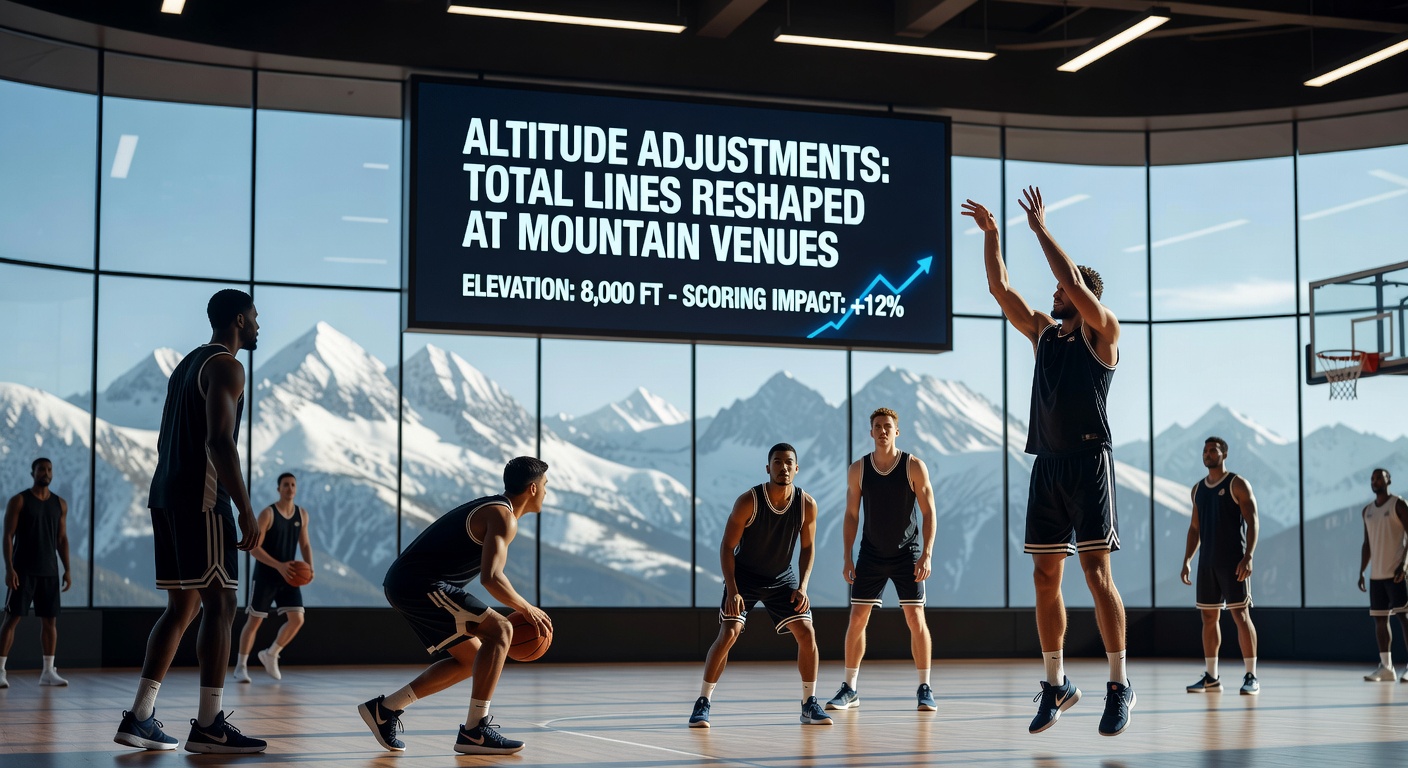
Other mountain facilities produce similar but smaller effects. Salt Lake City's arena sits near 4,200 feet and records scoring increases of roughly 5 points above neutral, while Mexico City's temporary NBA games at 7,300 feet generated totals that exceeded 245 on multiple occasions. European leagues rarely encounter comparable conditions, yet occasional games in Andean venues have prompted similar line inflation according to records maintained by the International Basketball Federation.
Analysts cross-reference these venue-specific numbers with travel schedules because jet-lag variables interact with altitude stress, and recent datasets indicate that East Coast teams visiting Denver suffer an additional 3-point drop in offensive efficiency compared with West Coast visitors who acclimate more gradually. These layered factors lead oddsmakers to consult multi-factor models rather than relying on altitude alone when finalizing totals.
Statistical Tracking and Predictive Models
Advanced tracking systems now incorporate altitude coefficients into expected-points formulas, and organizations such as the Australian Institute of Sport have published methodology papers detailing how environmental variables adjust possession-efficiency projections. NBA team front offices apply similar internal adjustments when preparing game plans, yet public betting markets still exhibit measurable lag before fully reflecting the latest seasonal data. Observers note that totals posted for June 2026 summer-league contests at high-altitude sites already opened 3 points above comparable low-elevation matchups, suggesting the pattern persists across developmental levels.
Regression analyses performed on five seasons of play-by-play data reveal that altitude accounts for approximately 14 percent of variance in total points once pace and defensive rating are controlled. The remaining variance stems from officiating tendencies and pace-of-play shifts that often accelerate when teams exploit the longer flight paths of outlet passes.
Future Considerations for Line Setting
As more granular environmental sensors enter arenas, sportsbooks gain access to real-time humidity and barometric-pressure readings that further refine totals. Canadian research groups studying performance under varying atmospheric conditions have begun sharing anonymized datasets with betting-industry partners, allowing models to differentiate between permanent altitude effects and transient weather influences. These incremental improvements reduce line errors at mountain venues but have not eliminated the systematic upward bias observed in historical totals.
Conclusion
Altitude continues to reshape basketball total lines at mountain venues through measurable physical and performance impacts that persist across multiple seasons. Data collected through June 2026 confirms that scoring environments differ enough from sea-level norms to require dedicated modeling adjustments, and sportsbooks respond by elevating totals while bettors monitor movement patterns for value opportunities. Regional comparisons, travel interactions, and advancing environmental tracking together maintain the relevance of altitude as a core variable in totals pricing at these distinctive sites.