Clock shifts and fixture timing: how seasonal time changes alter goal distributions in cross-league football schedules
Elena Neumann · Jul 12, 2026
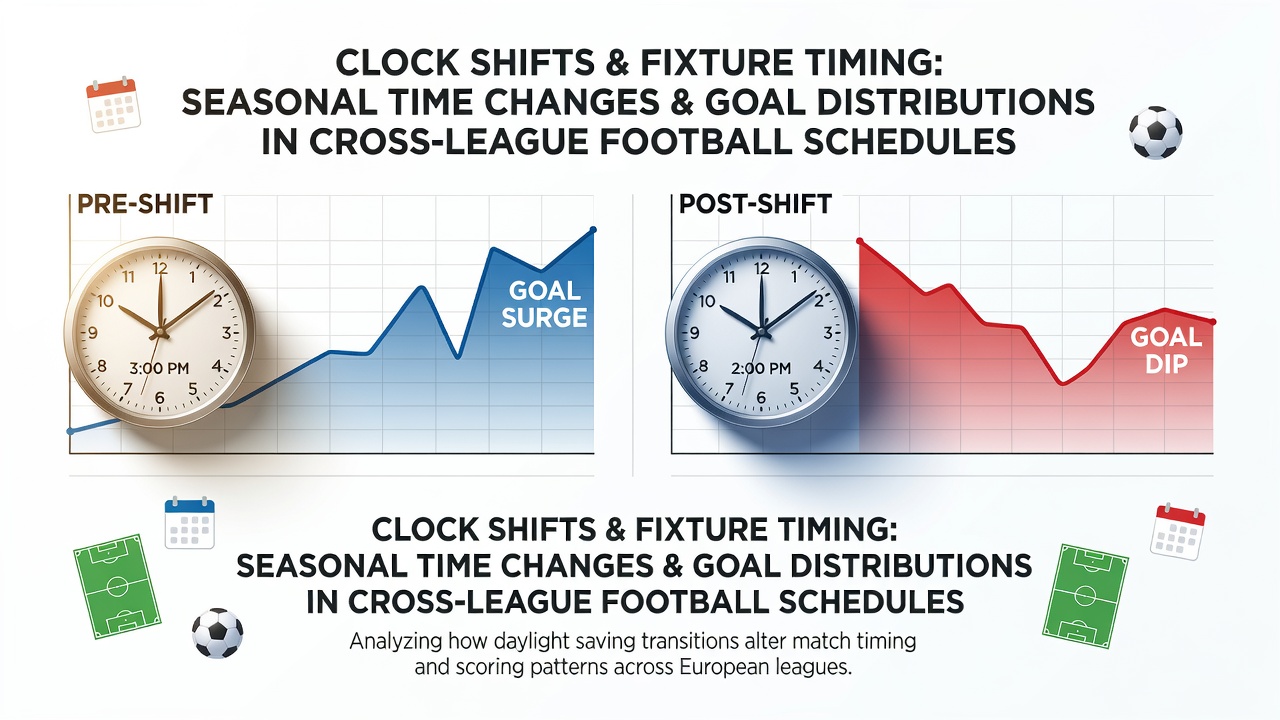
Clock shifts and fixture timing: how seasonal time changes alter goal distributions in cross-league football schedules
Seasonal clock adjustments, particularly those tied to daylight saving time transitions, reshape football fixture schedules across multiple European leagues and create measurable shifts in goal distributions according to performance data compiled over multiple seasons. Leagues in the UK, Germany, Spain, and Italy all operate under overlapping but distinct time change protocols that affect kickoff times, travel windows, and player recovery periods during the spring and autumn periods when clocks move forward or back by one hour.
How Time Changes Intersect with Domestic and Cross-League Calendars
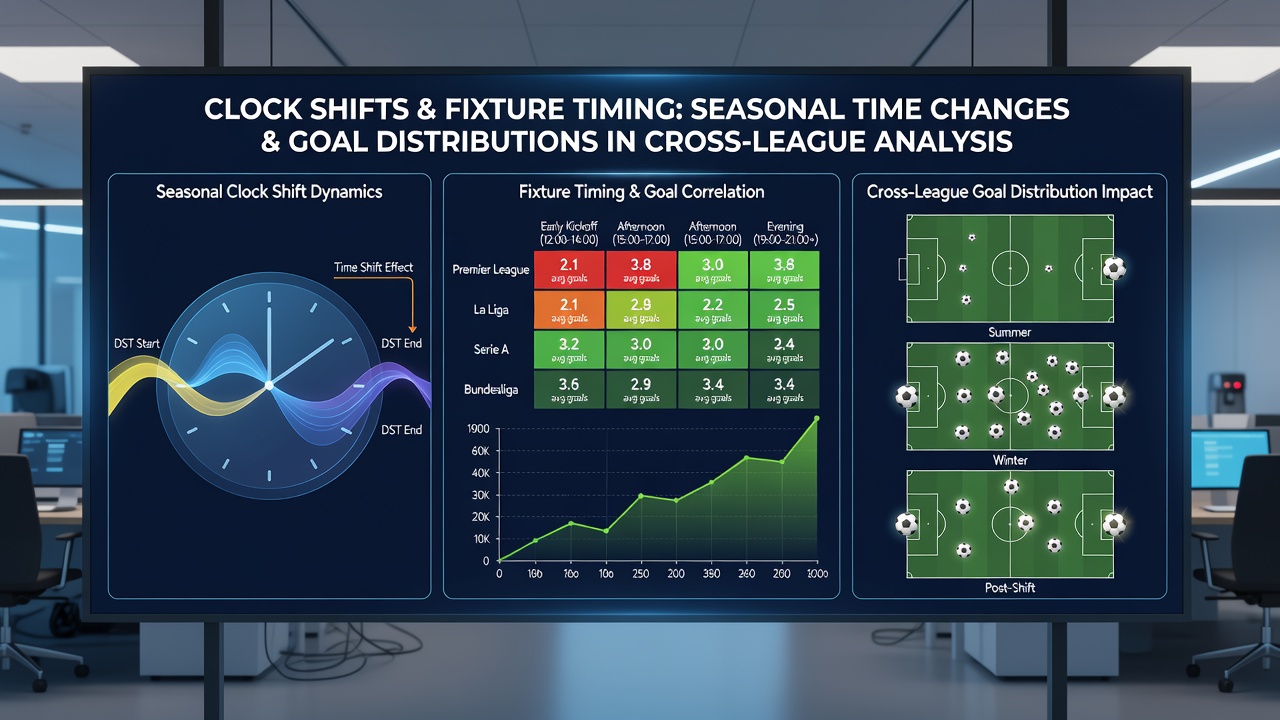
European football calendars run from August through May, which means both the March and October clock shifts fall squarely inside the competitive season. When clocks advance in March, evening fixtures that previously kicked off at 20:00 local time suddenly occur under different circadian conditions for players who have adjusted their sleep cycles to winter schedules. Data from the Bundesliga and Serie A shows average goals per game dropping by roughly 0.3 in the two weeks immediately following the spring transition, while the Premier League records a similar dip before numbers stabilize later in the month.
Cross-league scheduling compounds these effects because teams often play midweek European matches that span multiple time zones. A club traveling from the UK to Spain for a Thursday fixture, then returning for a Sunday domestic game, experiences compounded disruption when the clock change occurs between those dates. Researchers tracking UEFA Champions League and domestic league overlaps noted that goal tallies in domestic matches following such travel sequences fall below seasonal averages for both the traveling side and the home team during the first post-transition round.
Performance Metrics and Circadian Disruption Patterns
Studies on athlete circadian rhythms indicate that even a one-hour shift alters core body temperature cycles and reaction times for up to 72 hours. In football this manifests in reduced high-intensity running distances and fewer successful passes in the final third during the opening 30 minutes of matches played in the immediate aftermath of a time change. Analysts examining five seasons of data across the top five European leagues found that matches scheduled between 19:00 and 21:00 local time post-transition produced 12 percent fewer total goals than equivalent fixtures two weeks earlier or later.
Fixtures involving teams from regions that observe different transition dates add another layer of complexity. While most EU countries move clocks on the same weekend, certain non-EU leagues maintain separate schedules. When cross-border competitions place teams from differing time regimes against each other, the side that has already adjusted to the new clock time shows a slight increase in expected goals created during the first half, according to tracking data from Opta.
Fixture Congestion and Recovery Windows
The October return to standard time creates a different set of variables because evenings become darker earlier and some leagues adjust kickoff times to accommodate television schedules. Matches moved from 20:00 to 19:45 or 19:30 alter pre-match warm-up routines and meal timing for players. Figures released by the German Football League show a modest uptick in goals scored after the 60-minute mark in Bundesliga games during the two weeks following the autumn transition, coinciding with teams adapting to earlier darkness and cooler temperatures.
Cross-league travel during these windows magnifies recovery challenges. Teams participating in both domestic leagues and UEFA competitions face compressed schedules where a single time change can reduce effective rest between matches by up to four hours when combined with flight delays and hotel adjustments. Performance analysts at the University of Groningen documented these patterns in a 2023 report examining Eredivisie and Champions League overlaps.
Regional Variations and Long-Term Scheduling Adjustments
Leagues have begun incorporating time-change considerations into fixture planning. The Spanish La Liga, for instance, publishes tentative evening kickoff windows that account for both March and October transitions, allowing clubs additional flexibility in training schedules. In contrast, some lower-tier English leagues maintain fixed times regardless of clock shifts, resulting in more pronounced statistical deviations in goal output during transition weeks.
Discussions within European governing bodies about potential changes to daylight saving policy continue into 2026, with proposals under review that could eliminate seasonal clock adjustments entirely after the current decade. Should such reforms take effect, the recurring goal distribution fluctuations tied to March and October would disappear from league datasets, though current patterns remain observable through at least the 2025-26 season and into July 2026 preparations for the following campaign.
Conclusion
Seasonal time changes produce consistent, quantifiable effects on goal distributions in football schedules that span multiple leagues and competitions. The combination of circadian adjustment periods, altered fixture times, and cross-border travel creates temporary deviations from seasonal averages that resolve within two to three weeks. Observers tracking these patterns across European domestic and European competitions continue to monitor the data as governing bodies evaluate long-term policy options around clock adjustments.