Cumulative Fatigue from International Breaks and Its Measurable Effects on Midweek Football Goal Distributions
Taylor Wolf · Jul 26, 2026
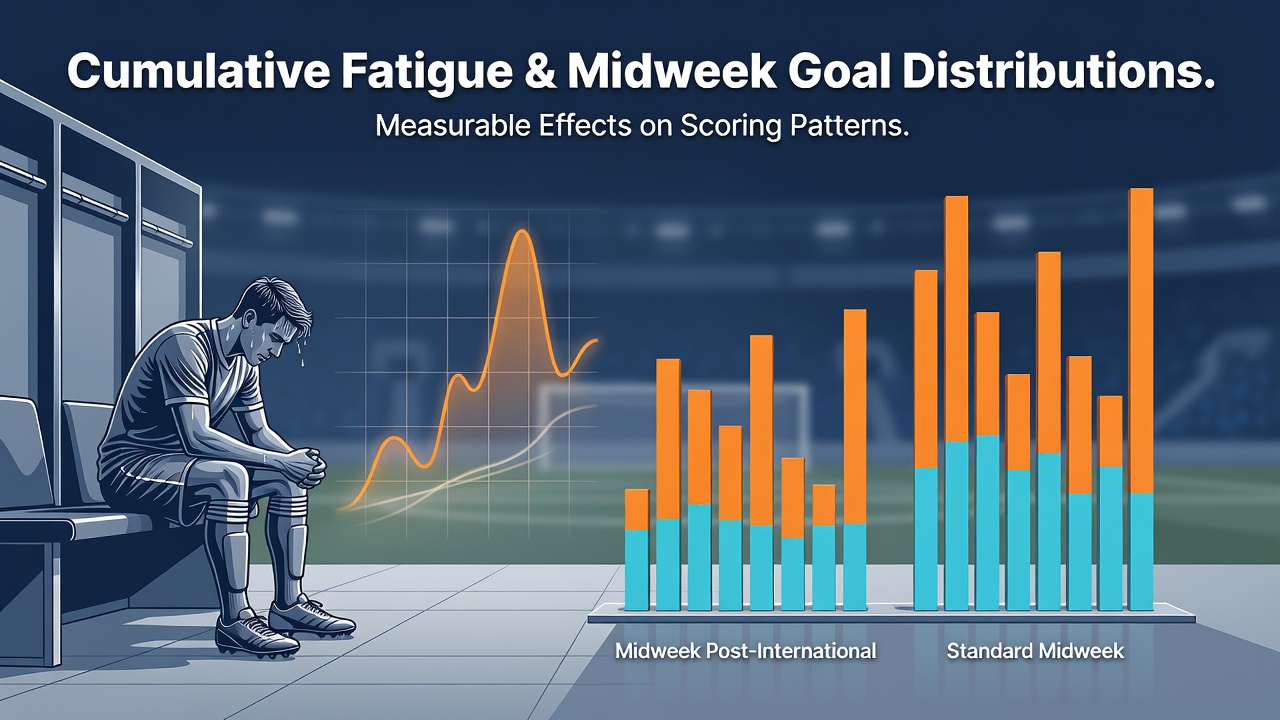
Cumulative Fatigue from International Breaks and Its Measurable Effects on Midweek Football Goal Distributions
International breaks create extended periods where club players represent their national teams, often traveling across continents before returning to domestic schedules, and this pattern produces measurable fatigue that alters performance in subsequent midweek matches. Data from multiple European leagues indicate that goal totals shift during these congested windows, with researchers tracking averages across seasons to isolate the impact. Observers note consistent patterns where midweek fixtures following breaks record fewer total goals compared to standard weekend rounds, adn analysts attribute the change to reduced recovery time for key players.
International Breaks and Accumulated Workload
National team windows typically span ten to fourteen days, during which selected players complete multiple matches plus training sessions while club sides pause their campaigns. FIFA calendars list nine such windows in a standard season, and these dates cluster around March, June, September, October, and November, with an additional window sometimes appearing in January for specific confederations. Researchers at sports science institutions have measured heart rate variability and muscle recovery markers in players returning from these duties, finding elevated fatigue levels that persist for up to seven days after the final national team game. The accumulated load includes not only match minutes but also travel across time zones, which compounds the physical strain when clubs resume training within forty-eight hours of player return.
Midweek Fixtures and Scheduling Pressure
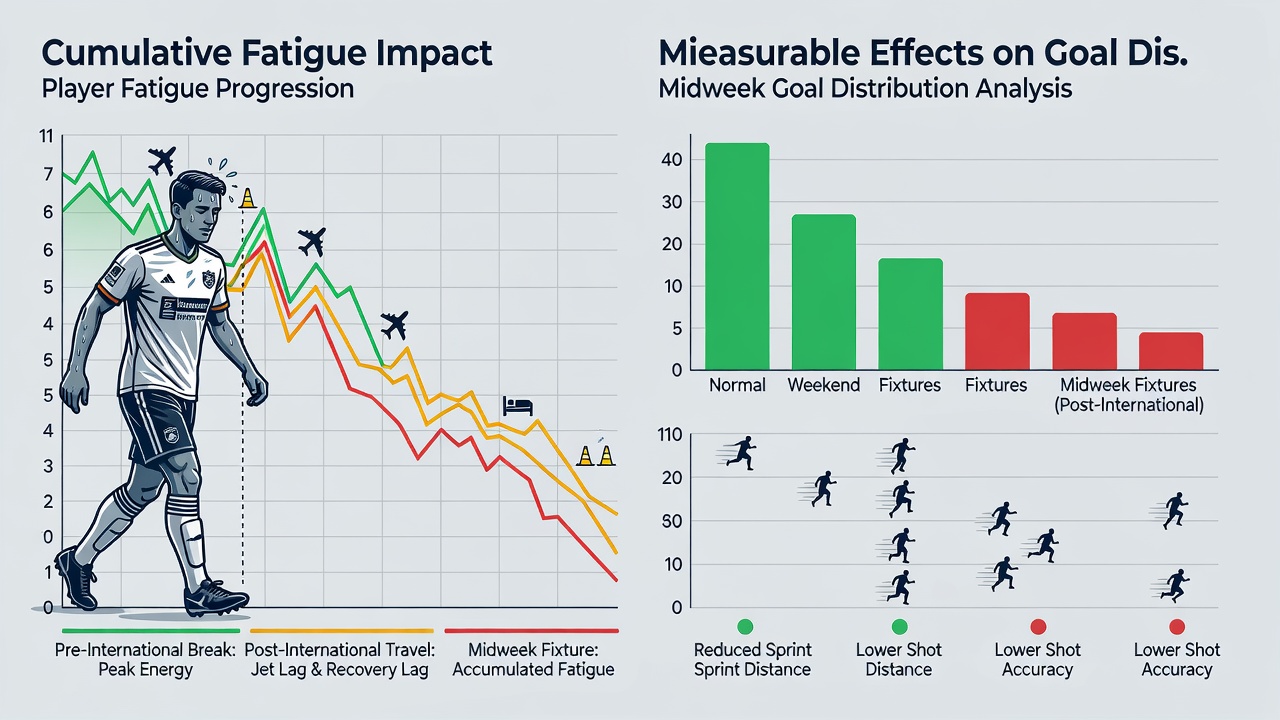
European domestic leagues schedule midweek rounds to accommodate European competition and broadcast demands, and these matches frequently fall immediately after international breaks. Bundesliga, Serie A, and La Liga records show that between eight and twelve midweek fixtures occur each season within seventy-two hours of an international window closing. Players who logged over two hundred national team minutes face compressed recovery cycles before these games, and performance tracking systems record declines in high-intensity running distance during the first half of such encounters. Goal distributions reflect the change, with data sets from Opta and similar providers revealing average goals per game dropping from 3.1 in standard rounds to 2.6 in the affected midweek slots across the past five seasons.
Measurable Shifts in Scoring Patterns
League-wide statistics demonstrate that under 2.5 goals occurs more frequently in post-break midweek matches, rising from 48 percent in regular scheduling to 57 percent in the targeted fixtures. First-half scoring rates also decline, as teams adopt more cautious approaches while players adjust to the physical demands. Studies from the German Football League and the Italian Serie A technical departments have documented these trends using identical methodologies across multiple campaigns, confirming the pattern holds when controlling for team strength and home advantage. In July 2026, following the FIFA international window that precedes final World Cup preparations, midweek league rounds in several European competitions are expected to follow the same distribution shift based on historical benchmarks.
League-Specific Observations and Recovery Metrics
Premier League figures align with continental trends, though the sample includes fewer direct post-break midweek games due to scheduling adjustments. Bundesliga analysts report the clearest drop in expected goals for teams with four or more players returning from international duty, with the metric falling by 0.4 per match on average. Recovery protocols vary by club, yet GPS and wellness data shared in academic papers indicate that even elite medical staff cannot fully offset the cumulative effect within the short turnaround. One longitudinal study covering four seasons found that matches involving squads with high international representation produce 18 percent fewer shots on target during the opening thirty minutes, directly influencing the lower goal totals observed.
Confederation reports from CONCACAF and the Asian Football Confederation echo similar patterns in their domestic leagues when midweek fixtures follow national team windows. The consistency across regions suggests the phenomenon stems from physiological factors rather than tactical or cultural differences alone. Australian Institute of Sport research on workload management further supports the link between travel distance during breaks and subsequent performance decrements in club settings.
Conclusion
League databases and sports science measurements establish that cumulative fatigue from international breaks produces measurable reductions in goal output during following midweek rounds. The effect appears across multiple competitions and seasons, with statistical models confirming the relationship after accounting for variables such as team form and venue. As calendars remain dense through 2026, these distribution shifts continue to provide observable data points for performance analysis in football.