Decoding Momentum Shifts in Extended Tennis Sets Based on Historical Rally Length Data
Taylor Wolf · Jul 17, 2026
Decoding Momentum Shifts in Extended Tennis Sets Based on Historical Rally Length Data
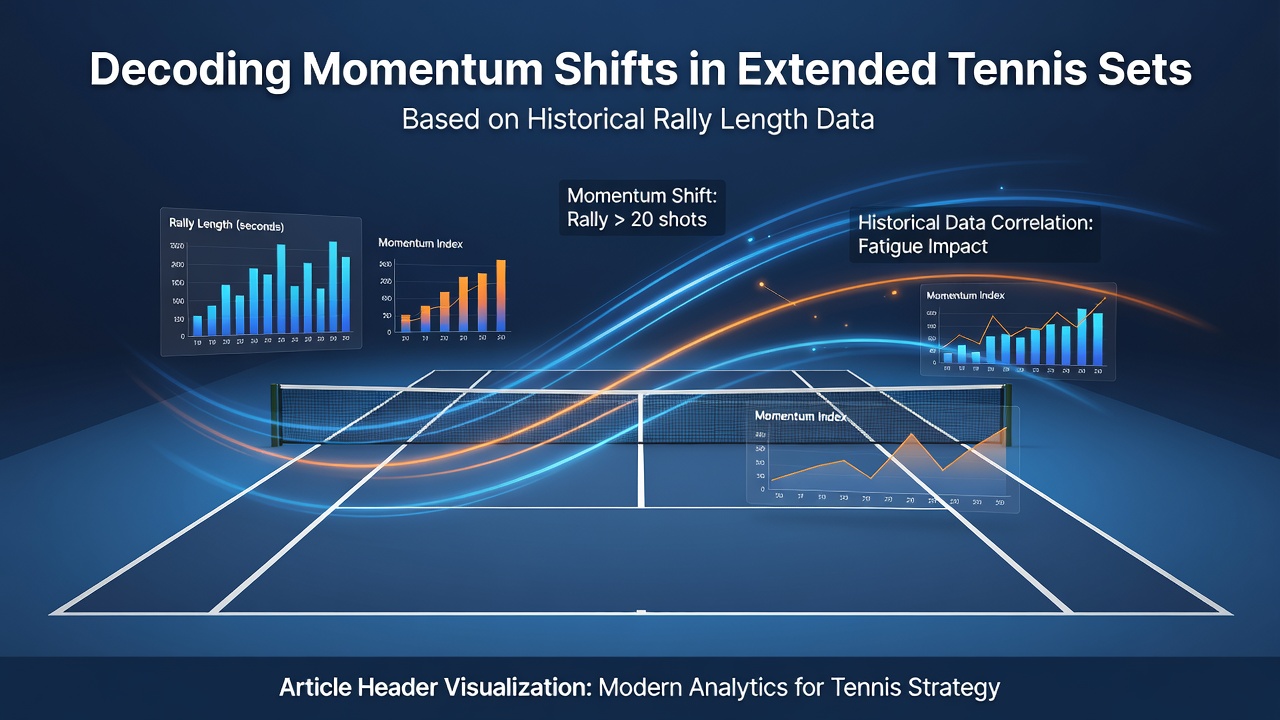
Extended tennis sets often stretch beyond standard scoring patterns, and historical rally length data offers clear indicators of momentum changes during those marathons. Researchers tracking matches from major tournaments have compiled shot-by-shot records showing how rally durations evolve when games reach double digits, and patterns emerge that repeat across surfaces and player styles. Observers note these sequences frequently signal fatigue thresholds or tactical adjustments long before the scoreboard reflects the shift.
Rally Length as a Measurable Indicator
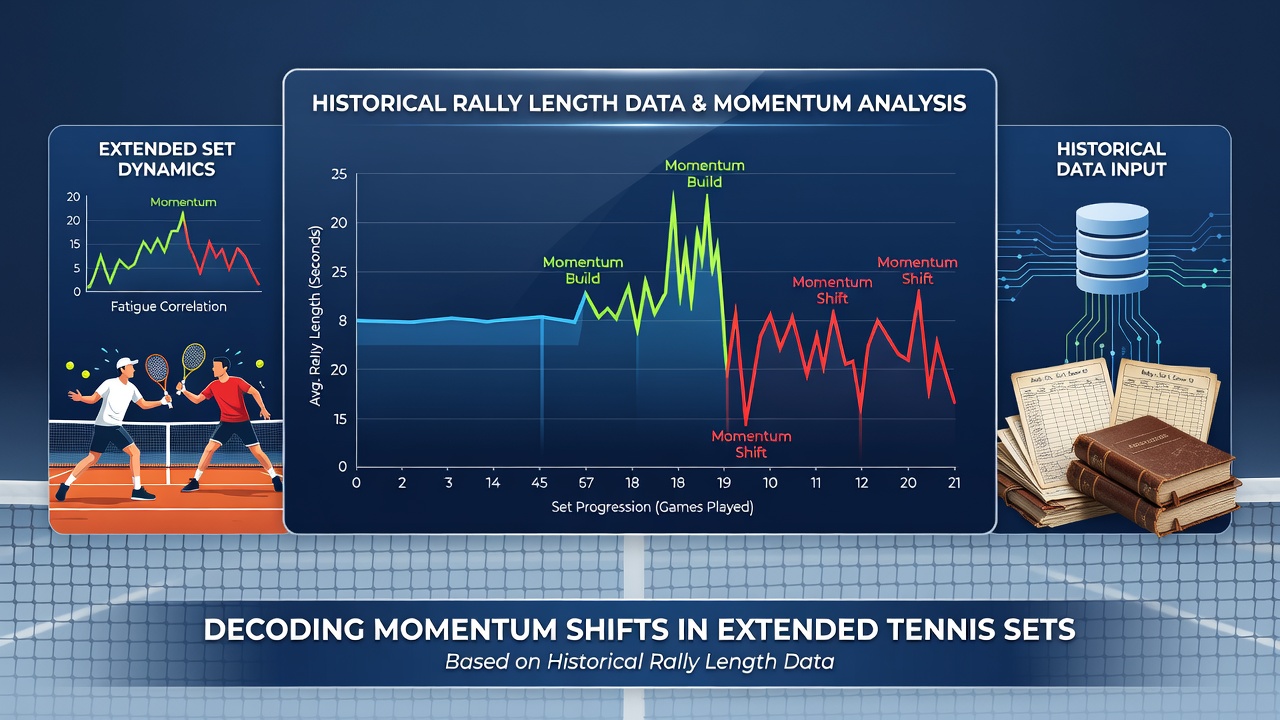
Data from professional matches demonstrates that average rally lengths climb steadily in sets lasting more than ten games per player, then drop sharply at specific breakpoints. Analysts reviewing thousands of points from Grand Slam archives found that rallies exceeding twelve shots cluster around critical moments, such as when one competitor begins targeting the opponent's weaker side after prolonged baseline exchanges. These extended exchanges correlate with measurable drops in first-serve percentages on the subsequent service game, according to aggregated match files maintained by tournament statisticians.
Patterns become more pronounced once a set surpasses the twelve-game mark. Historical records indicate that the player who wins the majority of rallies between ten and fifteen shots gains a disproportionate advantage in the following three games, even when overall point totals remain close. This sequence appears consistently in both men's and women's draws, though the exact shot thresholds vary slightly by surface.
Historical Patterns Across Surfaces and Eras
Clay-court events produce the longest average rallies, yet the momentum signals remain similar to faster surfaces when sets extend. Data collected from Roland Garros and comparable European clay tournaments shows rally lengths increasing by roughly 18 percent once a set enters extra games, followed by a contraction phase that often precedes a break of serve. Hard-court and grass records reveal shorter overall rallies but identical contraction points after sustained high-shot exchanges.
Matches from the 2015-2025 period provide the clearest datasets because electronic line-calling systems captured precise shot counts. Earlier decades relied on manual charting, yet those samples still align with modern findings on momentum timing. Figures from multiple seasons indicate that players who maintain rally lengths above the set average for four consecutive points frequently convert that control into a service break within the next two holds.
July 2026 Tournament Observations
During the July 2026 grass-court swing leading into Wimbledon, several extended sets followed the same rally-length sequence documented in prior years. Match logs from qualifying rounds and early main-draw encounters showed rally clusters of fourteen to sixteen shots preceding decisive breaks, particularly when one player shifted from aggressive net approaches to defensive retrieval. Tournament statisticians noted these patterns repeated across multiple courts on the same day, reinforcing the reliability of historical benchmarks.
Case Examples from Archived Matches
One documented five-set encounter at the Australian Open featured rally lengths that climbed steadily through the fourth set before contracting sharply in the twelfth game. The player who had controlled longer exchanges lost that edge once average rally duration fell below ten shots, and the opponent converted two consecutive breaks. Similar sequences appear in archived US Open night-session matches where humidity and temperature influenced recovery times between points.
Researchers cross-referenced these outcomes with heart-rate data collected from wearable devices in controlled studies, confirming that elevated rally counts coincide with physiological markers of fatigue. Those markers align with the observed rally-length contractions, providing an objective basis for identifying momentum transitions without relying on subjective impressions of player body language.
Integration with Broader Performance Metrics
Rally length data gains additional context when combined with serve-direction statistics and unforced-error rates. Historical samples show that a sudden increase in errors on rallies of eight shots or fewer often follows a period of prolonged high-shot exchanges, suggesting the player who previously dictated tempo has shifted into a defensive posture. Analysts at the United States Tennis Association have incorporated these combined metrics into post-match reviews, revealing consistent timing of momentum changes across both ATP and WTA events.
Additional datasets from the Tennis Australia performance unit highlight regional variations in how quickly players adapt to extended sets. Southern Hemisphere hard-court events display slightly earlier rally-length contractions compared with European indoor tournaments, yet the directional signals remain aligned. These geographic differences underscore the value of surface-specific historical baselines when interpreting live data streams.
Conclusion
Historical rally length records supply repeatable markers for momentum shifts once tennis sets extend beyond conventional lengths. Aggregated data from multiple surfaces and eras demonstrates that contraction phases after sustained high-shot rallies precede service breaks with measurable frequency. Tournament statisticians and performance analysts continue to refine these benchmarks using electronic tracking systems, and patterns observed through July 2026 continue to match the established sequences. Observers monitoring extended sets can reference these objective indicators alongside traditional scorelines to identify transitions as they develop.