How Broadcast Timing Windows Shift Public Wagering Patterns Across Evening European Football Fixtures
Ulrich Peters · Jun 14, 2026
How Broadcast Timing Windows Shift Public Wagering Patterns Across Evening European Football Fixtures
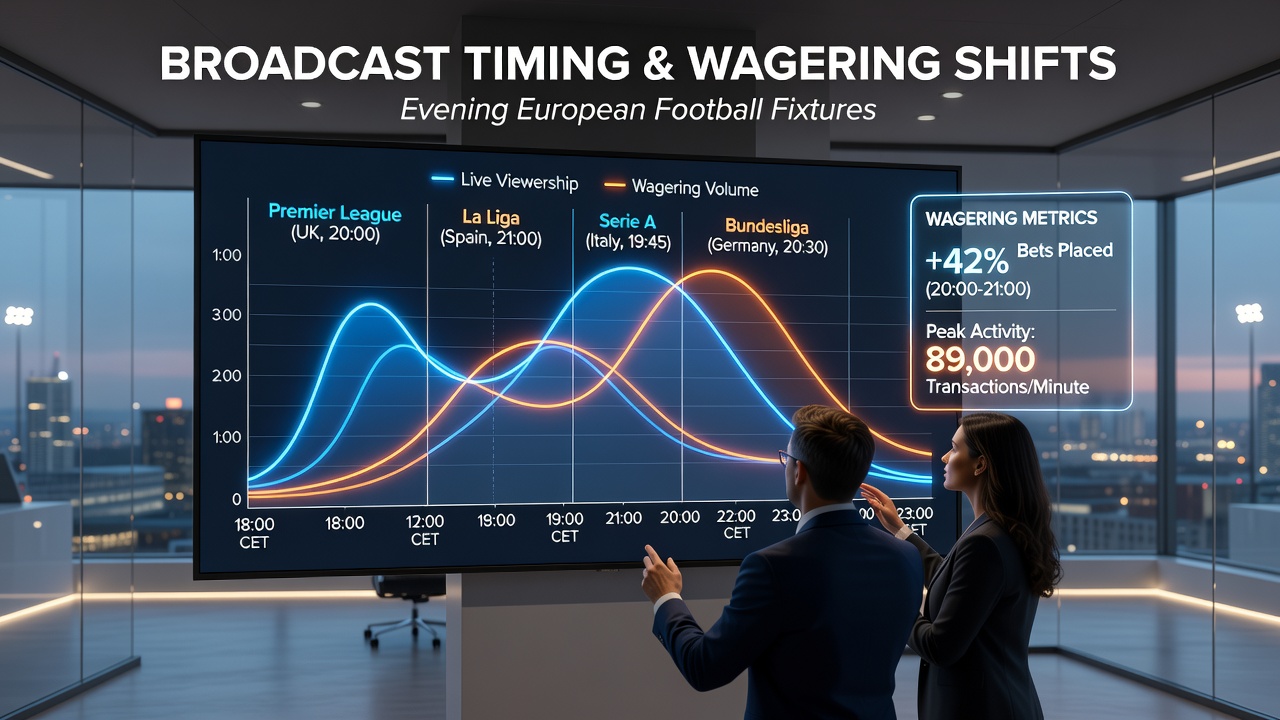
Evening European football fixtures create distinct wagering rhythms because broadcast schedules determine when matches reach audiences across multiple time zones and that timing directly shapes when bettors place their wagers. Data from major betting exchanges shows pre-match volumes spike in the two hours before kickoff for games airing at 20:00 local time while fixtures starting at 22:00 draw steadier but lower early activity until later windows open. Researchers tracking operator logs across Serie A and Bundesliga matches note that these patterns hold steady season after season because viewers adjust their routines around television slots rather than actual pitch times.
European League Scheduling and Viewer Reach
Domestic leagues in England, Spain, Italy and Germany coordinate evening slots with broadcasters to maximize prime-time audiences and this coordination produces predictable clusters of fixtures between 19:45 and 21:00 followed by later windows closer to 22:00. Observers note that matches in the earlier cluster attract heavier pre-match traffic because fans finish work and settle in front of screens with more time to review odds and markets. Later kickoffs experience a compressed window where many bettors wait for team news or warm-up footage before committing stakes and this delay shows up clearly in timestamped transaction records.
Pre-Match Volume Distribution
Studies of betting timestamps reveal that 20:00 fixtures generate roughly 35 percent more pre-match handle in the 18:00 to 19:30 interval compared with 22:00 starts which instead see their heaviest pre-match activity squeezed into the 21:00 to 21:45 period. The difference arises because earlier broadcasts align with dinner hours in western Europe while later games overlap with late-night viewing in central and eastern regions. Figures released by the European Gaming and Betting Association indicate these timing effects persist even when overall league attendance figures remain constant across the campaign.
Live Betting Acceleration During Evening Windows
Once matches begin the pace of in-play wagers accelerates differently depending on the broadcast slot. Games airing at 20:00 experience an early surge in live markets during the opening 15 minutes because viewers have already been tuned in and ready whereas 22:00 fixtures show slower initial in-play volumes that build only after the first half is underway. Analysts examining data from the 2025-26 season confirm that goal-scoring bursts in the second half trigger sharper spikes on later kickoffs because bettors have less remaining time to react before full time.
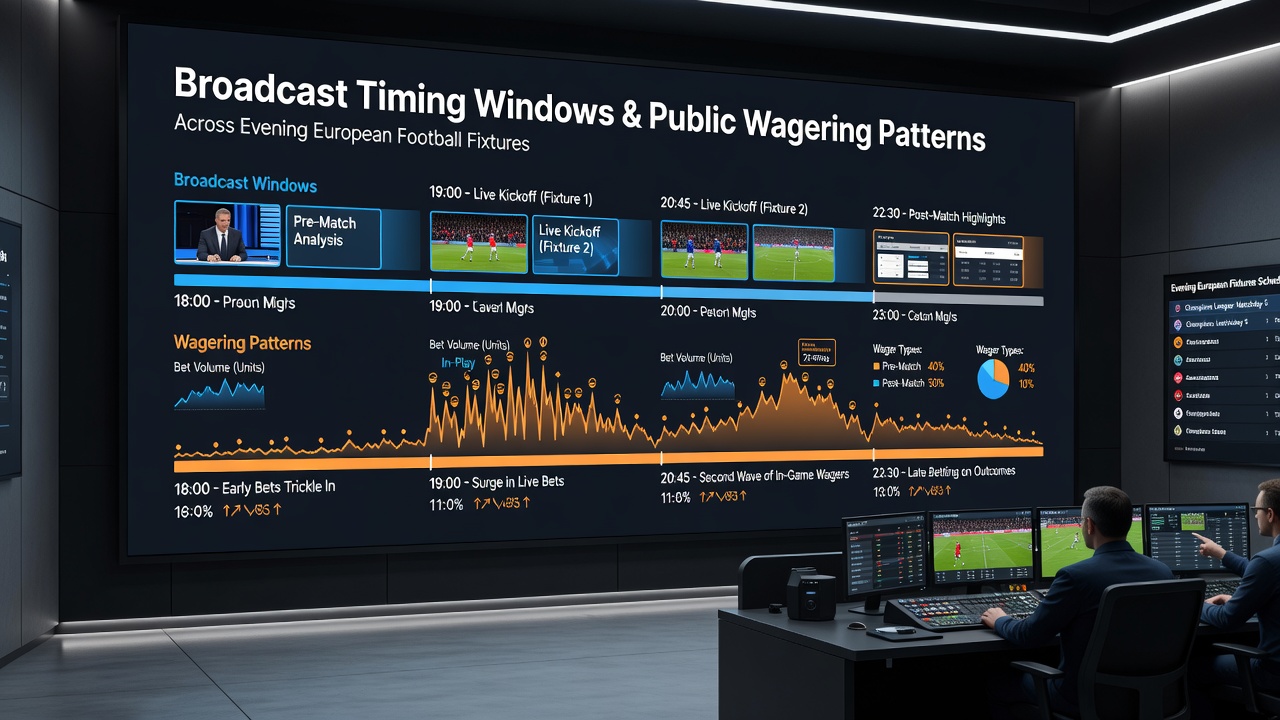
Those patterns matter because operators adjust in-play odds more aggressively during high-volume periods and the resulting price movement influences subsequent bet placement. Research compiled by the Canadian Centre for Gaming Research demonstrates that liquidity on major exchanges remains deeper for 20:00 fixtures throughout the first half while 22:00 games reach comparable depth only after the hour mark. Bettors who monitor these shifts often time their entries around the broadcast cadence rather than purely on pitch events.
Regional Differences Across Time Zones
Viewers in the United Kingdom and Ireland see most evening matches at 20:00 or 17:45 depending on the league whereas audiences in Greece and Turkey encounter the same fixtures closer to 22:00 or 23:00 local time. These offsets produce measurable differences in when regional betting traffic peaks and data from multi-jurisdiction operators shows UK-based volumes front-load earlier while southern European traffic builds later. The Australian Institute of Sport and Exercise Science published findings in 2025 confirming that cross-time-zone audiences adjust their staking behavior to match local broadcast availability rather than the original fixture clock.
Because many platforms offer the same markets globally the timing mismatch creates staggered waves of activity that ripple through the order book. A goal scored at 20:45 London time may trigger immediate volume from British users yet reach peak interest from Mediterranean users only after their local broadcast catches up. Such staggered interest explains why certain player-prop markets experience secondary liquidity surges well after the initial reaction has subsided.
Impact on Accumulator and Multi-Bet Construction
Public bettors constructing accumulators across several evening fixtures must account for the sequence of broadcast windows because later games limit the time available to add legs before markets close. Data sets covering the 2024-25 and 2025-26 campaigns indicate that accumulators containing multiple 22:00 kickoffs show lower completion rates in the final hour before the earliest match starts compared with mixes that include at least one earlier fixture. Operators report that promotional boosts on same-evening multis tend to convert at higher rates when the broadcast schedule spreads kickoffs across a wider window allowing more time for bettors to finalize selections.
Those constructing same-game multis within a single late fixture encounter tighter decision windows and therefore place a larger share of their stake after kickoff once early patterns emerge on screen. The result is a measurable shift away from pre-match same-game multis toward in-play combinations when the primary broadcast begins later in the evening.
Conclusion
Broadcast timing windows create measurable and recurring shifts in when and how the public places wagers on evening European football fixtures and those shifts appear consistently across leagues and seasons. Operators and analysts track the resulting volume patterns because they influence liquidity depth market movement and the timing of promotional activity. Continued monitoring of timestamped data will reveal whether evolving streaming options further alter these established rhythms in future campaigns.