How Injury Report Timing Affects Football Spread Movements in Midseason Games
Ellis Günther · May 17, 2026
How Injury Report Timing Affects Football Spread Movements in Midseason Games
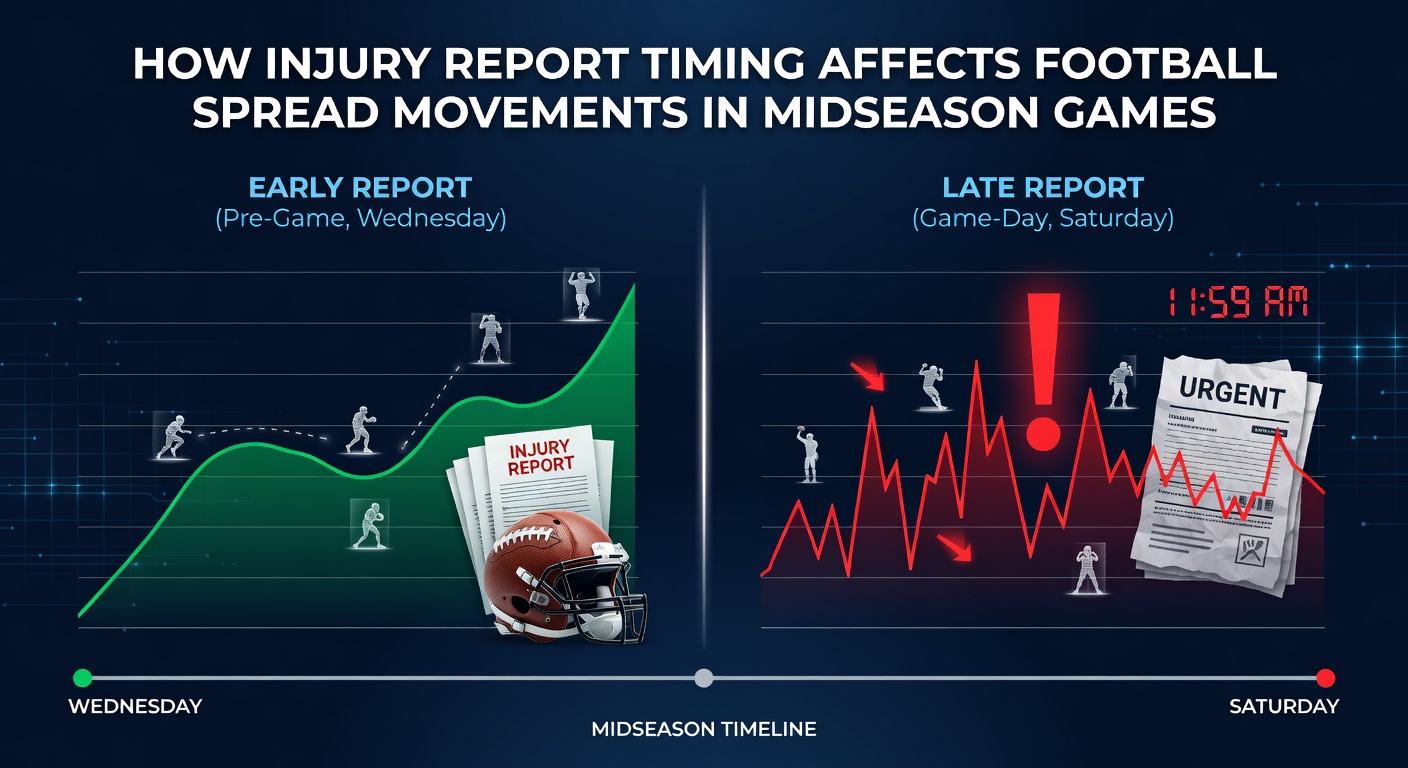
Professional football betting markets respond quickly to new information about player availability, and the precise timing of injury reports creates measurable effects on point spreads throughout the middle weeks of the season. Official injury reports follow a structured schedule that begins on Wednesday afternoons and continues through Friday, while practice participation details emerge in daily updates that allow oddsmakers and bettors to reassess team strength before kickoff. Data from multiple seasons shows that spreads in games involving key offensive or defensive starters often move within minutes of a Thursday report indicating a player has been downgraded from limited to did not participate.
Structured Release Windows and Market Reactions
NFL teams submit injury reports at set intervals each week, creating predictable windows when fresh details reach the public and trigger immediate line adjustments. Wednesday reports establish baseline expectations for most contests, yet Thursday updates frequently introduce changes that move spreads by half a point to a full point depending on the importance of the affected player. Observers note that spreads widen or tighten most sharply when a quarterback or starting cornerback appears on the report for the first time after Wednesday, because those positions carry outsized influence on game outcomes. Research from sports analytics groups indicates that Thursday afternoon movements account for roughly 60 percent of total pregame spread volatility in midseason matchups, while Friday morning reports produce smaller but still detectable shifts as final confirmations arrive.
Midseason Context and Cumulative Fatigue Factors
By the time Week 8 or Week 9 arrives, teams have already faced several opponents and accumulated wear that amplifies the impact of any new injury disclosure. Midseason games feature higher baseline uncertainty around player health compared with early-season contests because cumulative physical tolls make last-minute decisions more common. Figures from league tracking systems reveal that the average number of players listed as questionable rises steadily from Week 1 through Week 12, which in turn increases the frequency of spread adjustments tied directly to report timing. When a previously healthy offensive lineman lands on the injury report during Thursday, markets adjust spreads more aggressively in November than they do in September, reflecting the reduced depth many clubs experience once the season progresses.
Position-Specific Sensitivity and Historical Patterns
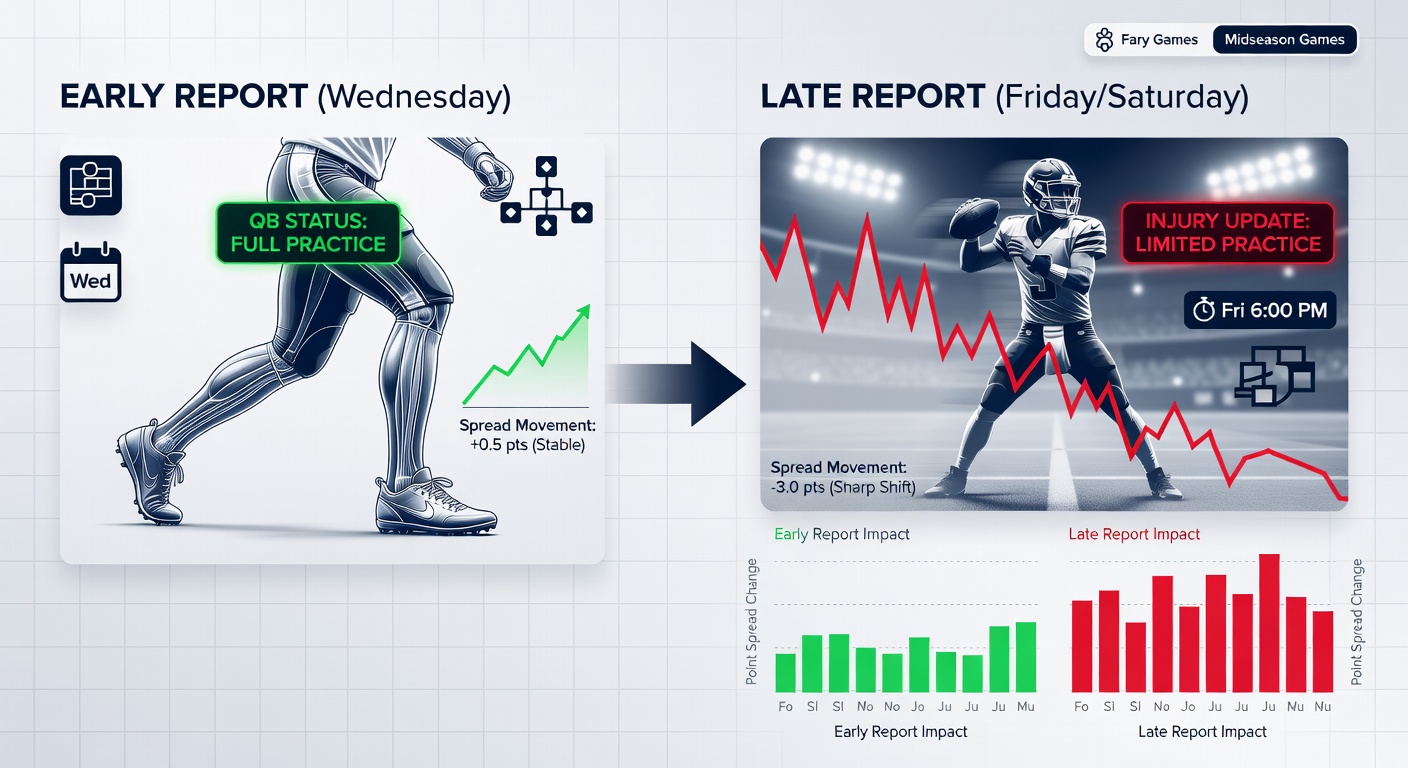
Certain positions generate larger spread reactions when their status updates late in the reporting cycle. Quarterbacks and running backs top the list because their absence forces schematic changes that directly alter projected scoring margins. One study covering five recent seasons found that spreads moved an average of 1.2 points when a starting quarterback was ruled out on Thursday, compared with 0.4 points for a similar downgrade involving a wide receiver. Line movements also vary by conference and schedule strength, with interconference games showing slightly larger reactions because bettors have fewer prior data points to rely upon. Those who track historical odds data observe that Thursday evening spread changes have become more pronounced since 2022, coinciding with expanded use of real-time injury tracking tools by both teams and betting operators.
External Data Sources and Analytical Tools
Betting analysts increasingly cross-reference official NFL reports with independent tracking data released by university research programs and league partners. Information published through the National Football League injury archive provides the authoritative baseline, while additional context comes from performance studies conducted at institutions such as the University of Waterloo sports analytics lab. These combined datasets allow quantitative models to estimate the probability that a questionable designation will convert into an actual absence, thereby refining spread projections before lines settle on Friday afternoon.
Conclusion
Timing of injury reports continues to serve as a primary driver of spread movement in midseason football games, with Thursday updates producing the most consistent and sizable adjustments across multiple seasons of data. Teams, oddsmakers, and market participants all operate within the same structured release windows, which means accurate interpretation of Wednesday through Friday reports remains essential for understanding how lines evolve right up to kickoff. As tracking technology and reporting protocols develop further into 2026, the relationship between report timing and spread volatility is likely to remain a central focus for anyone analyzing midseason football markets.