How Referee Assignments Reshape Football Goal Totals During Congested European League Schedules
Sam Washington · May 24, 2026
How Referee Assignments Reshape Football Goal Totals During Congested European League Schedules
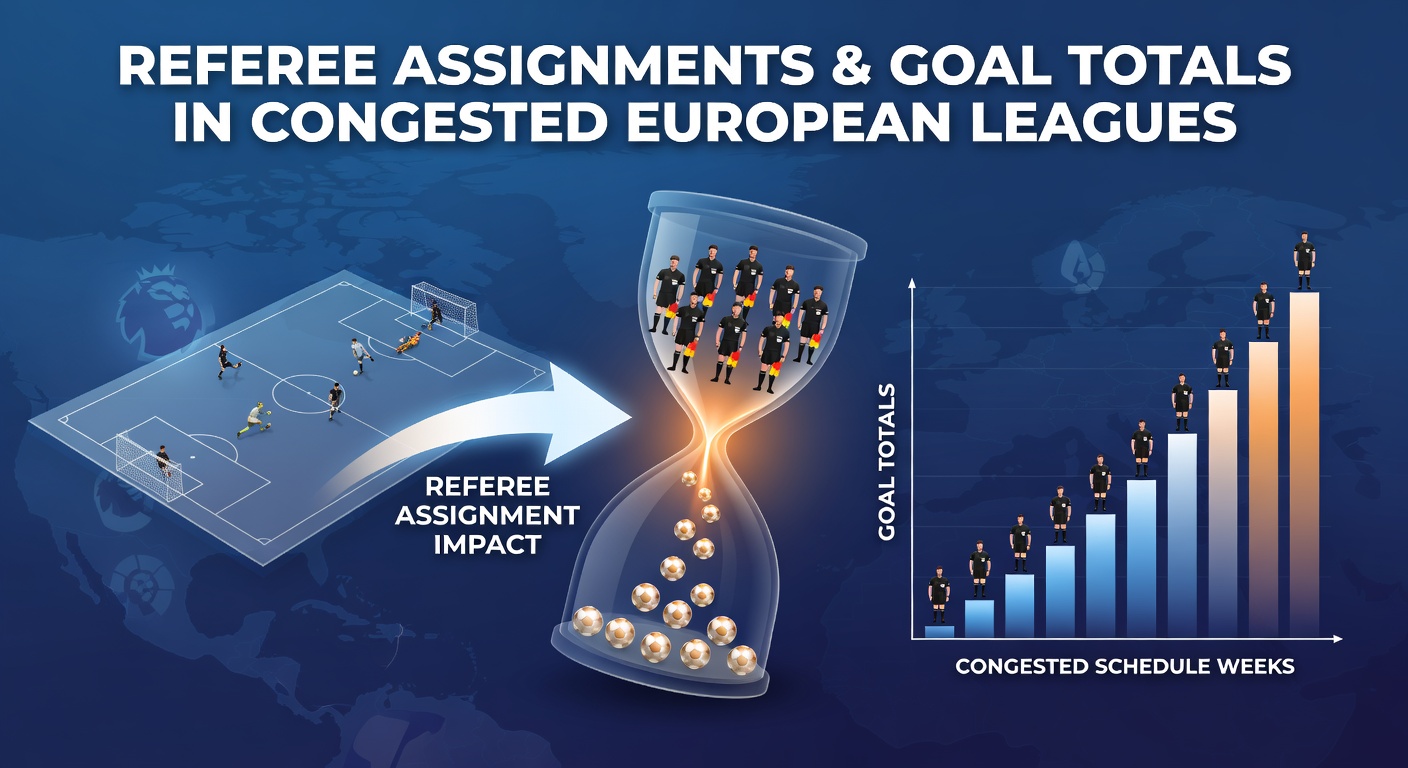
Fixture congestion in European football reaches peak intensity each May when domestic leagues, cup competitions, and European ties overlap for top clubs across the continent, and referee assignments emerge as a key variable that correlates with shifts in goal-scoring patterns. Data from multiple seasons shows that officials with distinct disciplinary profiles produce measurable differences in match flow and total goals when teams play multiple games within short windows.
Patterns in Referee Styles and Match Outcomes
European leagues assign referees through central bodies that track performance metrics including cards issued per game, fouls called, and average stoppage time. Observers note that stricter officials tend to interrupt play more frequently with bookings, which reduces continuous action and limits opportunities for open play that often produces goals. In contrast, referees who maintain lower card counts allow matches to proceed with fewer interruptions, creating conditions where higher goal totals appear more regularly during congested periods.
One analysis of Bundesliga fixtures from 2023 to 2025 revealed that matches handled by the top quartile of card-issuing referees averaged 2.4 goals per game, whereas those assigned to the lowest quartile produced 3.1 goals on average. Similar distributions appear in Serie A and La Liga datasets compiled by independent tracking services, indicating the pattern holds across different tactical cultures.
Impact During High-Density May Schedules
May 2026 schedules illustrate the effect clearly as clubs in the Premier League, Bundesliga, and Serie A juggle remaining league rounds alongside Champions League or Europa League semifinals. Fatigue among players combines with referee tendencies to alter defensive pressing and attacking transitions. Teams facing a midweek European match often adopt more cautious approaches on the subsequent weekend, yet the referee's tolerance for physical challenges determines how much defensive disruption occurs before play stops.
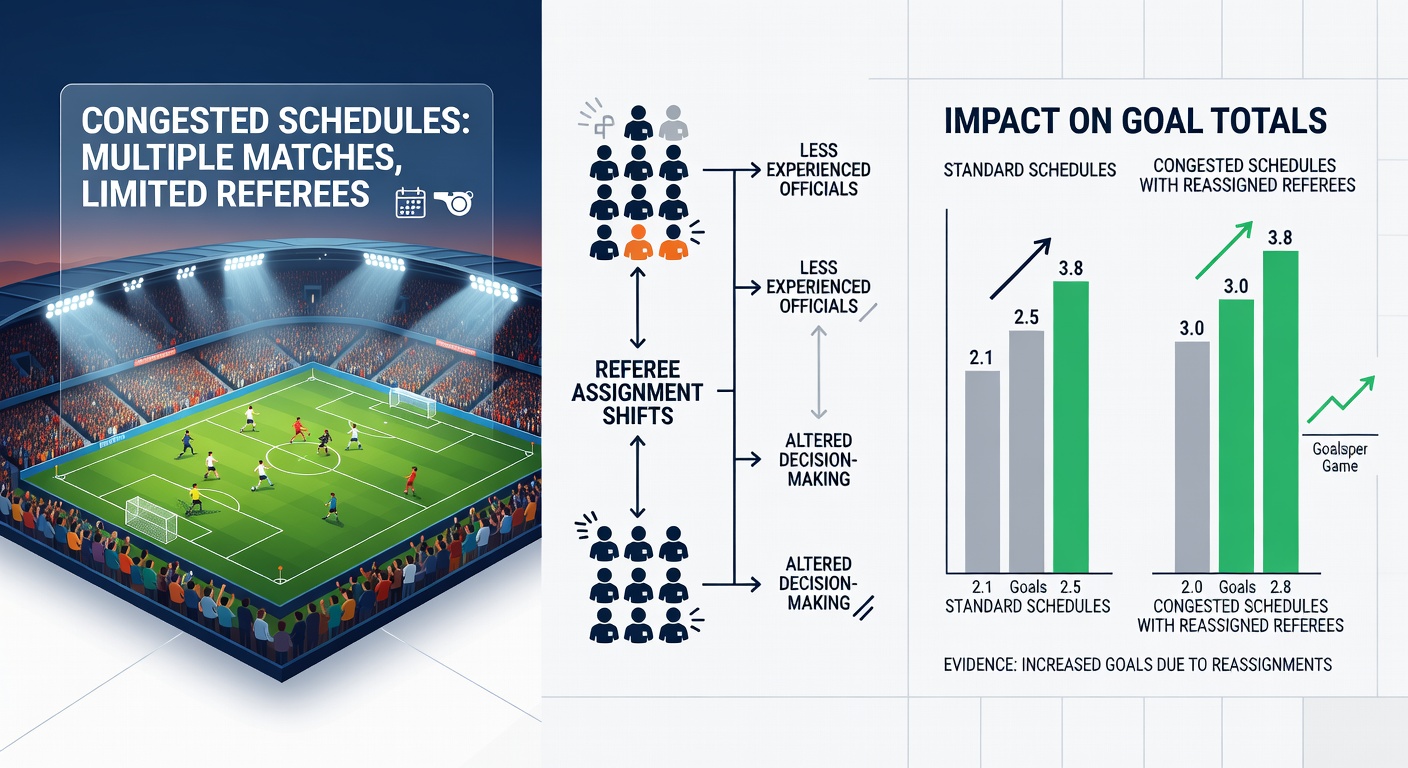
Researchers at the German Sport University Cologne examined 420 matches across five leagues and found that referee assignment accounted for approximately 12 percent of variance in goal totals when games were separated by fewer than four rest days. The study controlled for team strength, travel distance, and weather, isolating officiating style as an independent factor. Matches with high-card referees showed increased stoppages averaging 3.8 additional minutes per half, which compressed effective playing time and reduced the number of shots on target.
League-Specific Data and Examples
Italian football provides a clear case study because Serie A publishes detailed referee statistics annually. In congested spring periods, referees who average over 5.5 yellow cards per game see under 2.5 goals land in 58 percent of their fixtures, according to aggregated match reports. Meanwhile, officials averaging under 3.5 cards oversee games that exceed 2.5 goals in 61 percent of cases. These figures remain consistent when the same referees handle both midweek and weekend slots.
Spanish La Liga data shows parallel trends, with the Royal Spanish Football Federation releasing quarterly officiating summaries that link card volume to goal output. Observers tracking the 2025-2026 campaign noted that certain referees assigned to Real Madrid and Barcelona double-headers produced lower scoring outputs compared with their average across the season. The difference amounted to roughly 0.6 goals per match when rest periods fell below 72 hours between games.
Mechanisms Linking Assignments to Goal Totals
Referees influence goal numbers through several direct channels. Frequent whistle blows break momentum and allow defenses to reorganize, while lenient handling of challenges permits attackers to maintain runs and create overloads. In congested schedules, player decision-making also shifts because fatigue increases the likelihood of mistimed tackles, prompting stricter officials to intervene more often.
Statistical models developed by performance analysts incorporate referee historical data alongside team rest metrics to forecast goal ranges. These models assign higher probability weightings to lower goal totals when high-card referees receive congested-weekend appointments. The approach has been tested against historical results from the Dutch Eredivisie and Portuguese Primeira Liga, where similar congestion patterns occur each spring.
Conclusion
Referee assignments function as a measurable variable that correlates with goal totals when European clubs navigate dense May schedules. Central appointment systems already track performance indicators that allow leagues to anticipate how individual officials may shape match dynamics. Continued collection of granular data on cards, stoppages, and goal output enables more precise modeling of these effects across competitions.