How Transfer Deadlines Reshape Squad Depth Projections and Multi-Leg Football Selections in Winter Windows
Taylor Wolf · Aug 4, 2026
How Transfer Deadlines Reshape Squad Depth Projections and Multi-Leg Football Selections in Winter Windows
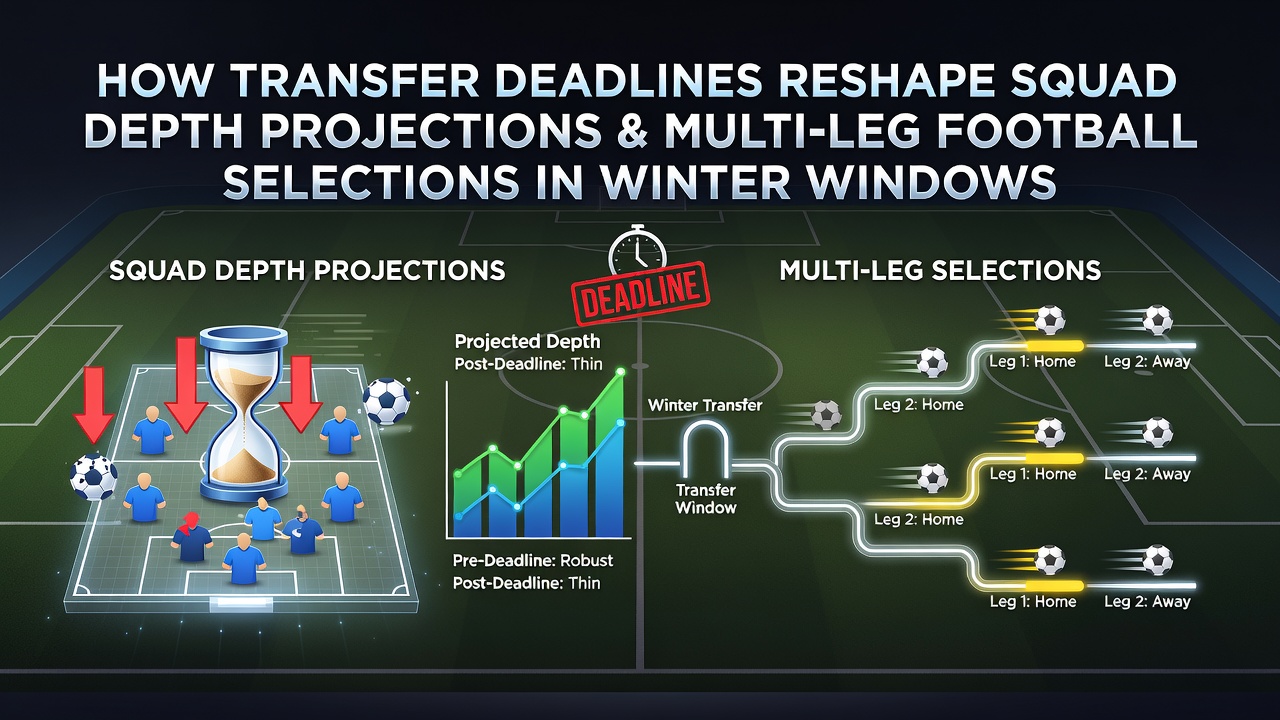
Transfer deadlines in European football create clear shifts in how squads build depth and how analysts project outcomes for multi-leg selections across winter windows. Data from the January period shows clubs often complete deals in the final days before the deadline closes, which alters available player pools for the second half of the season. Observers note that these late additions directly influence metrics like expected goals, clean sheet probabilities, and points per game in domestic leagues and European competitions.
Winter Window Mechanics and Timing Patterns
Winter transfer windows open in early January and close at the end of the month in most major leagues, though exact dates vary by competition. According to records maintained by FIFA, clubs must register new signings before the deadline to include them in matchday squads for the remainder of the campaign. Researchers tracking data across the Premier League, La Liga, and Serie A have documented that roughly 60 percent of winter activity occurs in the final week, with many deals finalized on deadline day itself. This concentration of activity means squad depth projections must account for sudden changes in attacking options, defensive reinforcements, and midfield rotations that become available only after the window shuts.
Squad Depth Adjustments Post-Deadline
Clubs that secure key targets before the deadline often see immediate lifts in rotation quality, while those who miss out face stretched resources during congested fixtures. Studies from the International Centre for Sports Studies indicate that teams adding at least one starter-level player in January improve their average squad depth score by measurable margins in subsequent match simulations. Depth here refers to the number of reliable options across positions rather than total headcount, and these improvements show up in reduced injury-related absences and steadier performance across multiple competitions. When a side loses a key player without adequate replacement, projections for clean sheets or over-2.5 goals shift accordingly because the remaining personnel carry higher workloads.
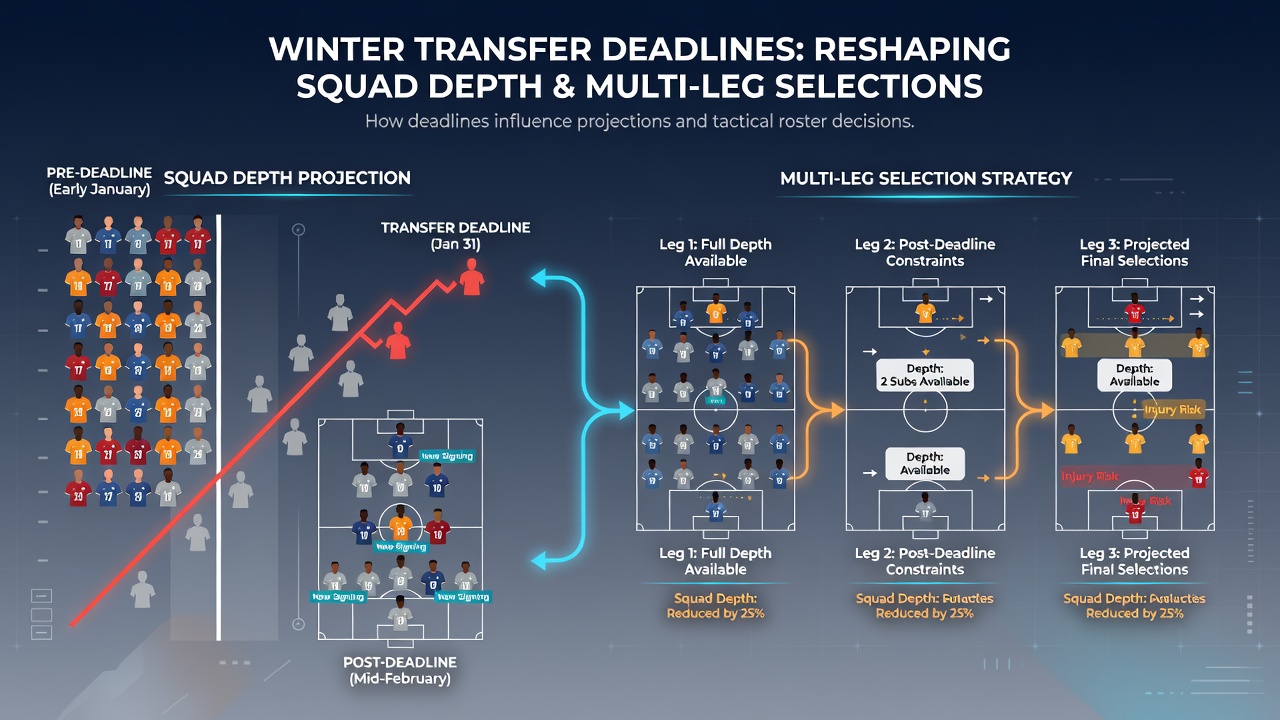
Multi-leg football selections rely on these updated depth assessments because accumulators combine outcomes from several matches. Bettors and analysts who factor in post-deadline changes adjust their combinations to reflect new starting elevens and tactical setups that clubs adopt once the window closes. Data patterns reveal that matches involving teams with fresh signings frequently produce different scoring distributions compared to pre-window forecasts.
Projection Updates and Selection Strategies
Analysts update squad depth models after each window by incorporating new player statistics and positional overlaps. Those who studied the 2025 winter window found that teams gaining defensive reinforcements reduced conceded goals per 90 minutes in the following months, which altered under-2.5 goals projections in multi-leg bets. Conversely, sides adding attacking talent increased expected goals outputs, shifting over-2.5 goals and both-teams-to-score selections. These adjustments require recalibration of accumulator structures because individual leg probabilities change once the full roster stabilizes.
What's interesting is how deadline-day deals create ripple effects across entire leagues. One study tracking Serie A clubs showed that late defensive signings correlated with fewer high-scoring games in the weeks immediately after registration. Researchers at CIES Football Observatory have compiled datasets showing that such patterns hold across multiple seasons, allowing analysts to build historical baselines for projection models. Multi-leg selections benefit when these baselines incorporate the timing of arrivals, since early-window signings integrate differently than deadline-day additions who may require more adaptation time.
Case Examples from Recent Windows
Take the case of a Premier League side that added a central midfielder on deadline day in January 2025; subsequent fixtures demonstrated improved control in midfield duels and lower concession rates in away matches. Observers tracking these outcomes noted that multi-leg selections built around under-2.5 goals in that team's games gained accuracy once the new player's influence appeared in lineups. Another example involves a Bundesliga club that failed to replace an injured striker before the window closed, leading to measurable drops in shot volume and goal conversion that analysts incorporated into revised over-2.5 goals projections for their remaining schedule.
European governing bodies maintain registration records that confirm these timing effects, and industry reports from organizations such as the European Club Association highlight how squad planning now factors in deadline pressure when forecasting second-half performance. Those projections feed directly into multi-leg strategies because combinations spanning several leagues must reflect varying window rules and their impact on available depth.
Conclusion
Transfer deadlines continue to drive measurable changes in squad depth and the accuracy of multi-leg football selections during winter windows. Updated data on registrations, player integration timelines, and positional reinforcements allow analysts to refine projections once clubs finalize their January business. These shifts appear consistently across major leagues and provide clear inputs for selections that combine outcomes from multiple matches.