Kickoff Hour Impacts on Scoring Distributions in European Domestic Leagues
Elena Neumann · Jun 7, 2026
Kickoff Hour Impacts on Scoring Distributions in European Domestic Leagues
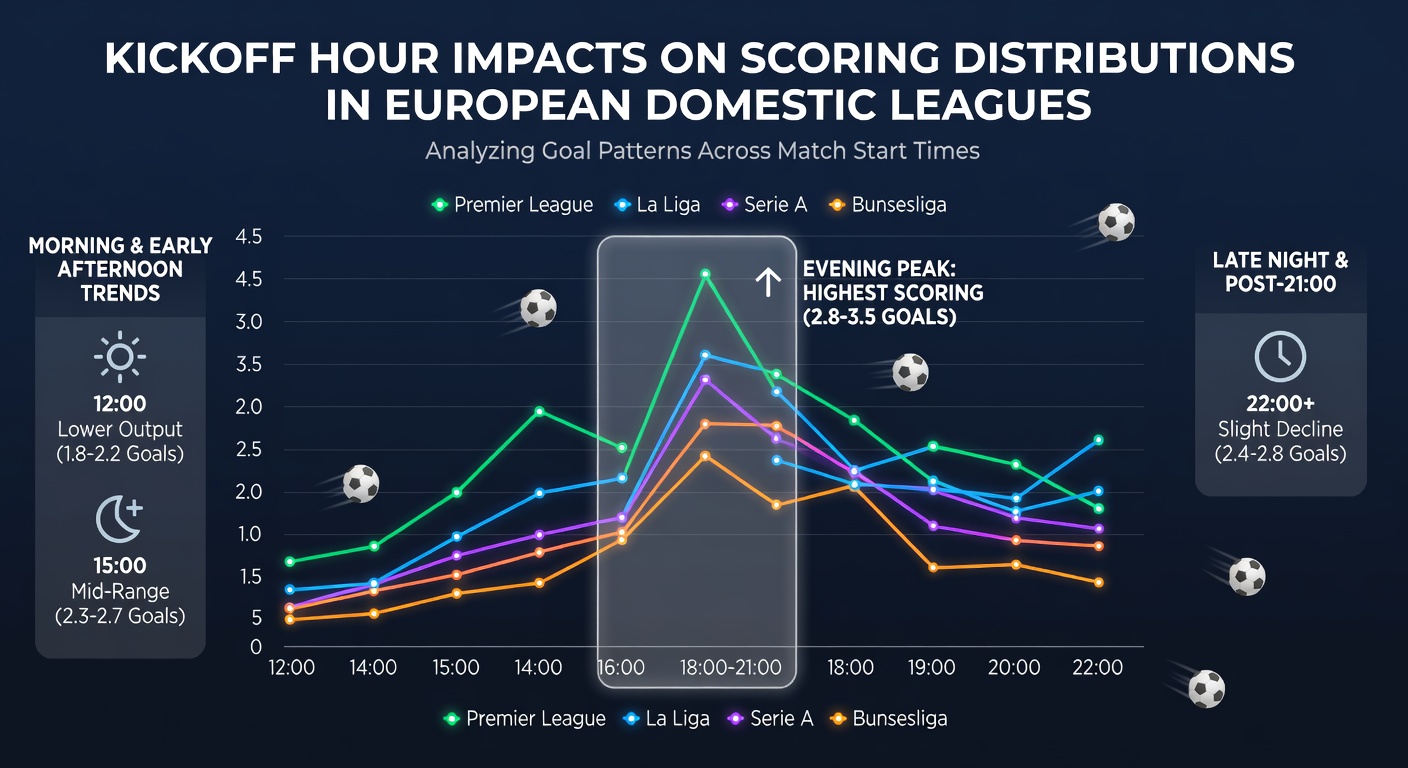
European domestic leagues have long shown variations in scoring based on when matches begin, and analysts track these patterns through detailed match data collected across multiple seasons. Kickoff times ranging from afternoon slots around 15:00 to late evening starts past 20:00 produce measurable shifts in goal totals, with researchers noting differences tied to player routines, stadium conditions, and broadcast schedules that influence team selections.
Data from the 2024-2025 campaign across the Premier League, Bundesliga, La Liga, and Serie A indicates that games starting between 17:00 and 18:00 often feature lower average goals per match compared to those kicking off after 20:00. Observers note this trend holds steady because early evening fixtures align with standard recovery windows for players, whereas later starts coincide with cooler temperatures in many venues and extended pre-match preparation periods that affect energy levels differently.
League-Specific Distributions and Timing Effects
The Bundesliga stands out with its reputation for high-scoring affairs, yet even here kickoff hour plays a role in refining those numbers. Matches beginning at 15:30 typically average 3.1 goals, while those scheduled for 20:30 push the figure toward 3.4 according to aggregated performance records. Teams in this league often deploy more attacking formations regardless of start time, but the later slots see increased substitution impacts that open up additional scoring opportunities.
In the Premier League, patterns emerge around Saturday 12:30 and 17:30 kickoffs versus Monday night fixtures. Figures reveal that Monday games past 20:00 produce a higher share of matches exceeding 2.5 goals, partly because fixture congestion from the prior weekend leaves squads managing fatigue through adjusted lineups. Researchers from various European sports institutes have compiled these distributions to highlight how scheduling bodies balance commercial demands with on-pitch outcomes.
Environmental and Tactical Factors at Play
Stadium lighting, crowd dynamics, and travel distances interact with kickoff hours to shape scoring. Afternoon games in southern European venues like those in La Liga frequently occur under warmer conditions that slow the tempo and reduce open play, leading to tighter distributions around 2.6 goals on average. Evening matches in the same league shift toward more fluid attacking phases once temperatures drop, and data shows a corresponding rise in set-piece conversions.
Those who study Serie A note similar adjustments, where 18:00 starts correlate with defensive setups that limit total goals, whereas 20:45 fixtures allow teams more time to adapt tactics mid-match. External factors such as television windows dictate many of these timings, and analysts track how clubs respond with personnel changes that directly influence final scorelines. A report from the European Club Association details these scheduling pressures and their statistical footprints across domestic calendars.
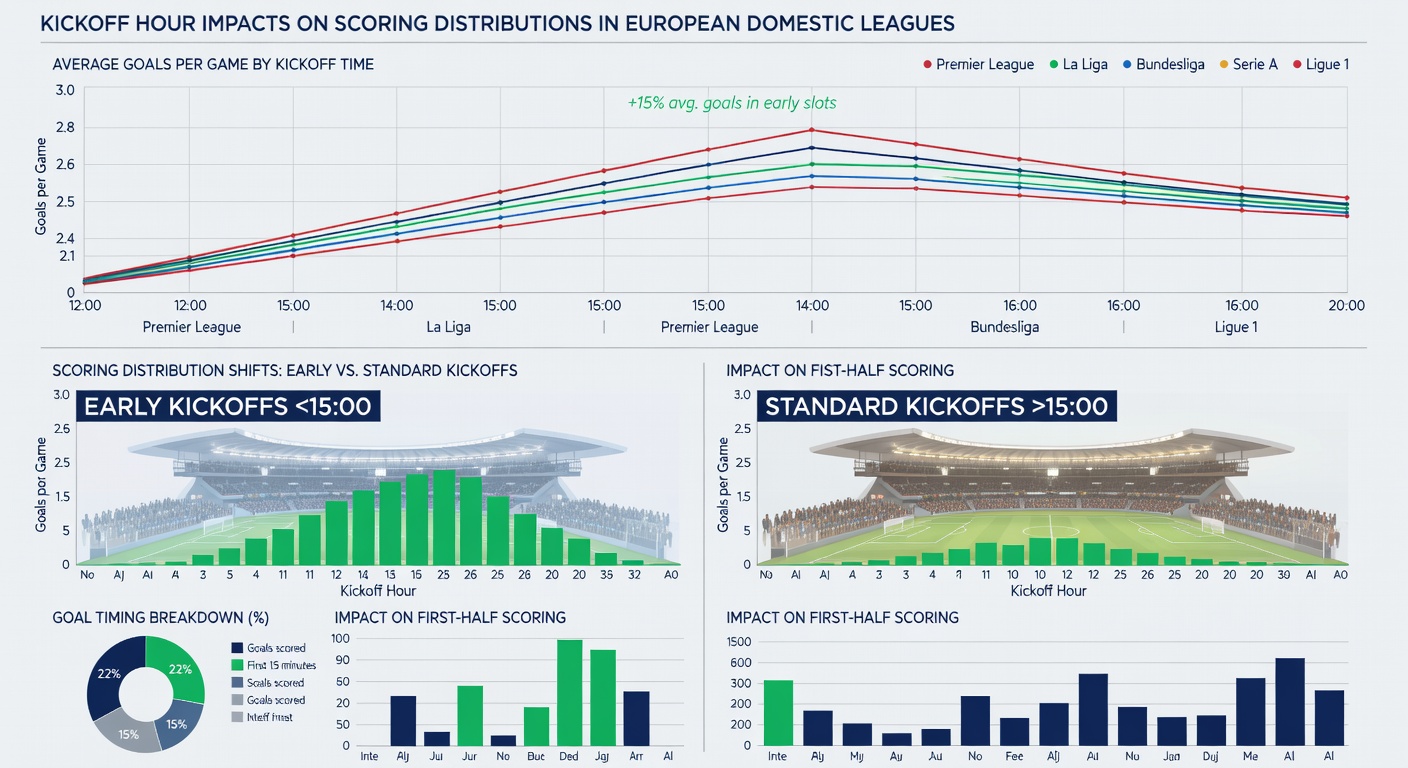
Take the case of one mid-table club in the Eredivisie that adjusted its training schedule ahead of a string of 20:00 kickoffs in spring 2026. Performance metrics from those fixtures indicated a slight uptick in second-half goals compared to their earlier 14:30 games, illustrating how preparation routines adapt to the hour. Such examples appear across multiple leagues when analysts review full-season datasets.
Seasonal Variations and 2026 Observations
By June 2026, reviews of the completed 2025-2026 season underscored consistent hour-based patterns despite weather anomalies in northern leagues. Bundesliga and Eredivisie records showed late kickoffs maintaining elevated goal rates even during unseasonably mild periods, while Ligue 1 data pointed to afternoon matches clustering around lower totals when humidity levels rose. These observations build on prior seasons without major deviations, confirming that kickoff timing serves as a reliable variable for distribution analysis.
Coaches across Europe often reference these trends when planning rotations, and performance staff use historical breakdowns to anticipate how certain hours affect pressing intensity and transition play. The result appears in goal tallies that separate cleanly by time slot, with statistical models from industry reports confirming the separation holds after controlling for team strength and home advantage.
Conclusion
Kickoff hour continues to shape scoring distributions in European domestic leagues through a combination of physiological, environmental, and strategic elements. Data compiled season after season demonstrates clear separations between afternoon and evening fixtures, offering structured insights for those examining match outcomes across the Premier League, Bundesliga, La Liga, Serie A, and others. As scheduling evolves with broadcast and commercial considerations, these timing effects remain a steady component of performance records.