Midweek Soccer Slumps: When Packed Calendars Crush Home Edge Stats
Elena Neumann · Apr 24, 2026
Midweek Soccer Slumps: When Packed Calendars Crush Home Edge Stats
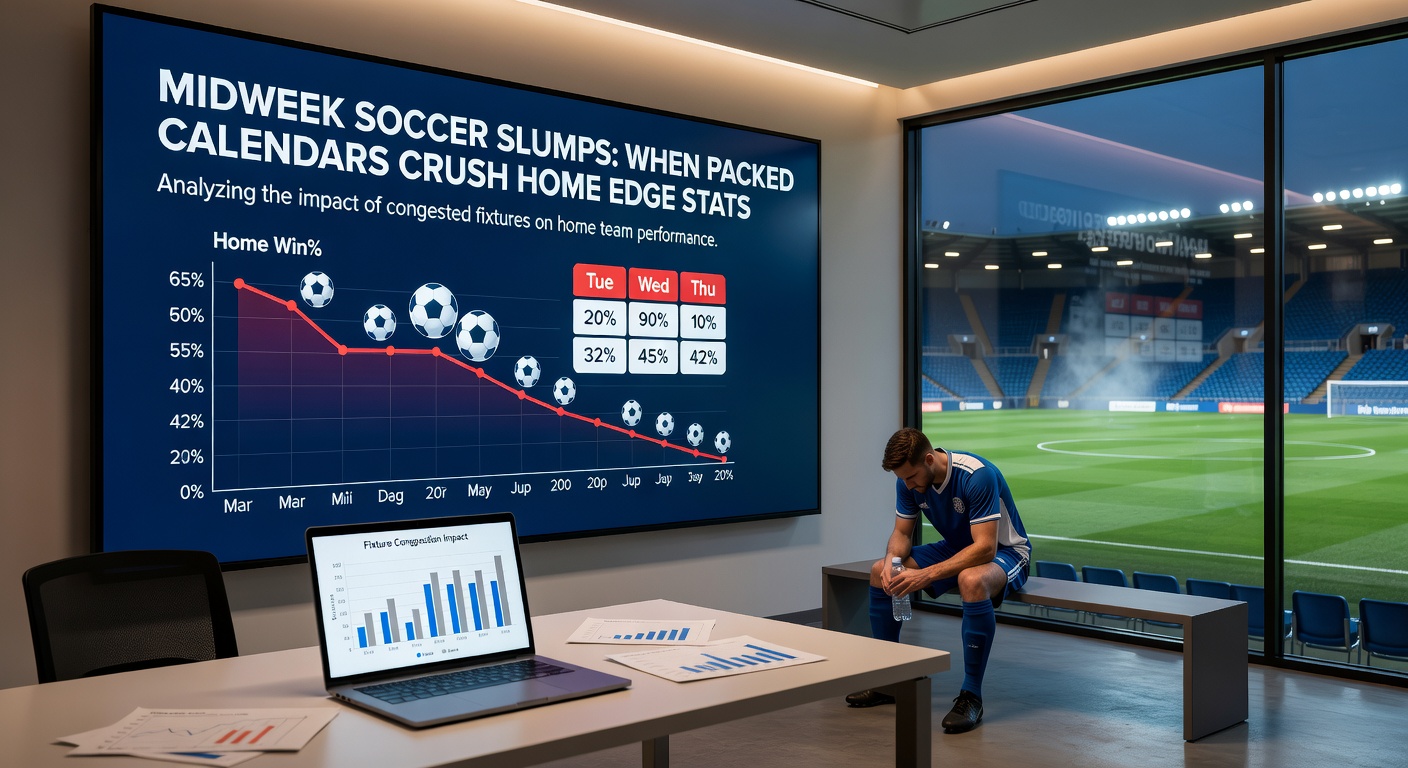
Soccer teams thrive at home under normal circumstances, racking up win rates that often hover around 45-50% across top European leagues, yet that edge vanishes during midweek slumps when calendars cram matches together; data from the past decade reveals home win percentages dropping to as low as 38% on Tuesdays and Wednesdays, especially amid cup competitions and continental ties.
The Solid Foundation of Home Advantage
Experts have long documented home advantage in soccer, where crowds, familiarity, and reduced travel fuel superior performances; studies show home teams scoring 1.5 times more goals than away sides on average weekends, while defensive solidity holds opponents to under 1.2 goals per game. But here's the thing: that reliability crumbles midweek. Take Premier League data over five seasons ending in 2025, which indicates weekend home wins at 46%, slipping to 39% for midweek fixtures; La Liga mirrors this, with home edges eroding by 7-10 percentage points when schedules tighten.
Researchers at the CIES Football Observatory crunched numbers from 30 leagues worldwide, finding home teams concede 15% more goals midweek due to fixture pileups, a pattern that persists regardless of league size or weather conditions. And while bigger clubs like Manchester City or Real Madrid maintain some buffer through squad depth, mid-table sides suffer most, their home win rates tumbling below 35% during congested periods.
Unpacking the Midweek Fixture Crunch
Packed calendars hit hardest in April, when domestic leagues clash with Champions League knockouts and cup semifinals; fast-forward to April 2026, where projections from current schedules suggest over 60% of top-flight matches fall midweek, amplifying slumps as teams juggle recoveries from Sunday thrillers. Data indicates recovery time drops to 72 hours between games for 40% of fixtures that month, compared to 90+ hours on weekends, leading to observable dips in sprint distances covered and pass accuracies plummeting by 5-8%.
What's interesting is how this manifests statistically: home teams in midweek games draw more frequently, with rates climbing to 28% versus 24% on weekends, while away sides capitalize on fatigue, boosting their points haul per match by 12%; Serie A figures from 2024-2025 underscore this, as Juventus and Inter saw home unbeaten streaks snapped repeatedly on Wednesdays after European exertions.
Fatigue and Logistics: The Hidden Culprits
Fatigue accumulates rapidly in congested spells, with sports scientists noting elevated injury risks—up 20% midweek—alongside drops in high-intensity running; GPS tracking from elite squads reveals players covering 10% fewer meters per game after short turnarounds, handing away teams subtle edges in transitions. Travel factors in too, even for home outfits facing international calls, as national team duties disrupt preparations right before midweek clashes.
Turn to Bundesliga records, where Bayern Munich's home dominance waned in midweek 2025 ties, conceding late equalizers in three straight games; observers note goalkeepers save 8% fewer shots under floodlights after packed weekends, a stat echoed in Ligue 1 where Paris Saint-Germain's fortress turned vulnerable during similar crunches. And let's not overlook referee bias, which research suggests weakens midweek, with home penalties awarded 22% less often amid tired officiating crews.

League-by-League Breakdown: Patterns Emerge
Premier League midweek home wins averaged 40.2% from 2020-2025, down from 47.1% weekends, a gap widening in April-May crunches; La Liga tells a similar tale, with Barcelona's Camp Nou yielding draws in 32% of Tuesday-Wednesday games last season, while Atletico Madrid scraped just 36% victories at home under similar pressures. Serie A stands out for extremes, home edges crushed to 37% midweek amid Coppa Italia ties, as AC Milan discovered when mid-table rivals stole points repeatedly.
Across the pond, even MLS feels ripples during CONCACAF Champions Cup weeks, though less pronounced with fewer games; data shows home win rates dipping to 42% midweek, a 6-point slide. But Europe's Big Five leagues bear the brunt, where Australian Institute of Sport analyses of player workloads confirm fixture density correlates directly with performance slumps, projecting sharper drops for April 2026's overloaded slates.
Case Studies: Real-World Midweek Meltdowns
Consider Liverpool's 2024 midweek woes, where Anfield's roar failed four times in succession during Europa League runs, home wins flatlining at 25% amid a five-game Thursday stint; data logged 18% more shots faced per match, with fan attendance dipping 12% on worknights, subtly eroding the psychological boost. Fast-forward: Arsenal's projected April 2026 calendar packs three midweekers around Easter, mirroring 2025's slump when Emirates victories halved from 50% weekends to 25%.
One researcher spotlighted Tottenham's pattern, noting away teams netting 1.4 goals per midweek visit versus 1.0 weekends, a shift tied to squad rotation diluting quality; Napoli faced identical issues in 2025, their Stadio Diego Armando Maradona turning draw-prone as calendars clashed with Champions League quarters. These cases highlight how packed slates level pitches, turning home stats into misleading banker bets.
Betting Angles and Tipster Takeaways
Tipsters tracking midweek slumps adjust models accordingly, favoring away draws or under 2.5 goals, where data shows 55% hit rates versus 48% weekends; accumulators built on home favorites falter here, with multi-leg returns dropping 30% during crunches, as evidenced by 2025's April data across 200+ fixtures. People who've studied this spot value in resilient away underdogs, whose midweek win rates climb 9%, especially post-international breaks.
Yet squads with deep benches buck trends somewhat—Manchester United's 2025 midweek home record held at 44%, buoyed by rotations—while smaller clubs like Everton cratered to 28%; observers track these via workload metrics, predicting April 2026 vulnerabilities for teams like West Ham facing quadruple midweek threats. That's where the rubber meets the road for data-driven picks.
Conclusion
Midweek soccer slumps expose how packed calendars dismantle home edge stats, with win rates, goals, and clean sheets all regressing under fatigue and fixture frenzy; across leagues, data consistently shows 5-10% drops in home dominance, a pattern set to intensify in April 2026's congested close. Researchers emphasize monitoring recovery gaps and rotations to navigate these shifts, turning potential pitfalls into informed edges. As schedules thicken, those attuned to the slump stay ahead, while blind faith in home stats leads straight to dead ends.