Schedule Density Effects on Margin Reliability in Continental Club Events
Sam Washington · Jun 16, 2026
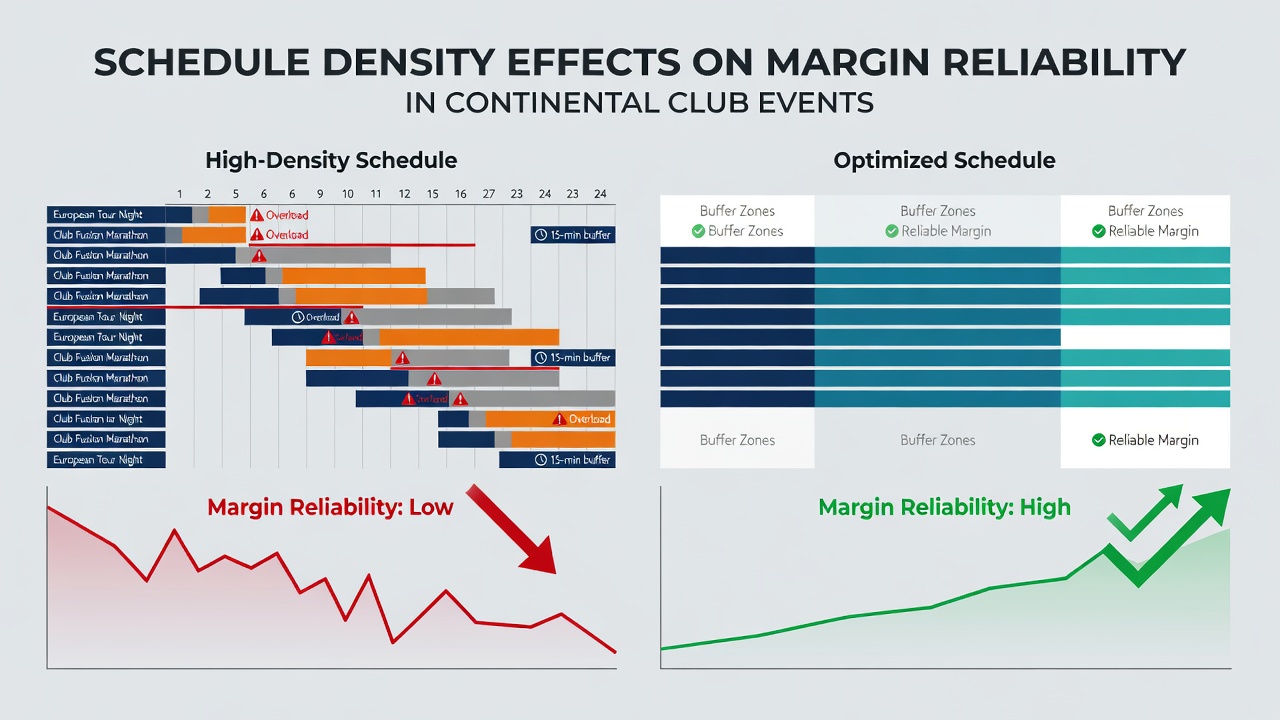
Schedule Density Effects on Margin Reliability in Continental Club Events
Continental club events such as the UEFA Champions League, Copa Libertadores, and AFC Champions League create fixture congestion that alters performance consistency and affects how betting margins hold up over extended campaigns. Teams often face midweek international fixtures alongside domestic league obligations, leading to compressed recovery windows and increased travel demands that reshape expected outcome ranges.
Data from multiple seasons shows that when clubs play three or more matches within a seven-day period, variance in goal margins widens compared with standard weekly schedules. Researchers tracking these patterns note that home advantage metrics fluctuate more sharply during such blocks, while away performance metrics drop at rates that exceed typical seasonal averages.
Fixture Overlap Patterns Across Major Confederations
UEFA competitions schedule group stage matches on Tuesdays and Wednesdays, forcing clubs from leagues with Saturday domestic rounds into tight turnarounds. Similar structures appear in CONMEBOL events where Copa Libertadores ties frequently land on Tuesdays and Wednesdays, coinciding with national league weekends in Argentina, Brazil, and Uruguay. Observers tracking these calendars find that clubs from nations with shorter domestic seasons encounter fewer overlaps than those from top-five European leagues, yet the cumulative fatigue effects remain measurable across both regions.
Travel distances compound the issue. South American clubs crossing time zones for away legs in the Copa Libertadores report average rest reductions of 18 to 24 hours compared with intra-country domestic fixtures. European clubs traveling between eastern and western time zones experience parallel disruptions, though shorter flight durations moderate some impacts. These variables feed directly into statistical models that underpin margin calculations for in-play and pre-match markets.
Performance Variability and Margin Stability
Margin reliability refers to the consistency with which bookmakers and analysts can project scoreline spreads and total goals under given conditions. When schedule density rises, historical datasets used to calibrate these projections lose predictive power because recent form becomes less representative of underlying team strength. Studies examining five consecutive seasons of UEFA group stage data indicate that matches following a midweek continental fixture produce goal totals that deviate from pre-match expectations by an average of 0.4 goals more often than matches played after a full rest week.
Lineup rotation decisions further influence outcomes. Coaches managing squad depth adjust starting elevens more aggressively during congested periods, introducing players with fewer minutes in high-stakes environments. Performance tracking services record elevated error rates in passing accuracy and defensive positioning for these rotated units, widening the distribution of possible results and reducing the stability of margin estimates.
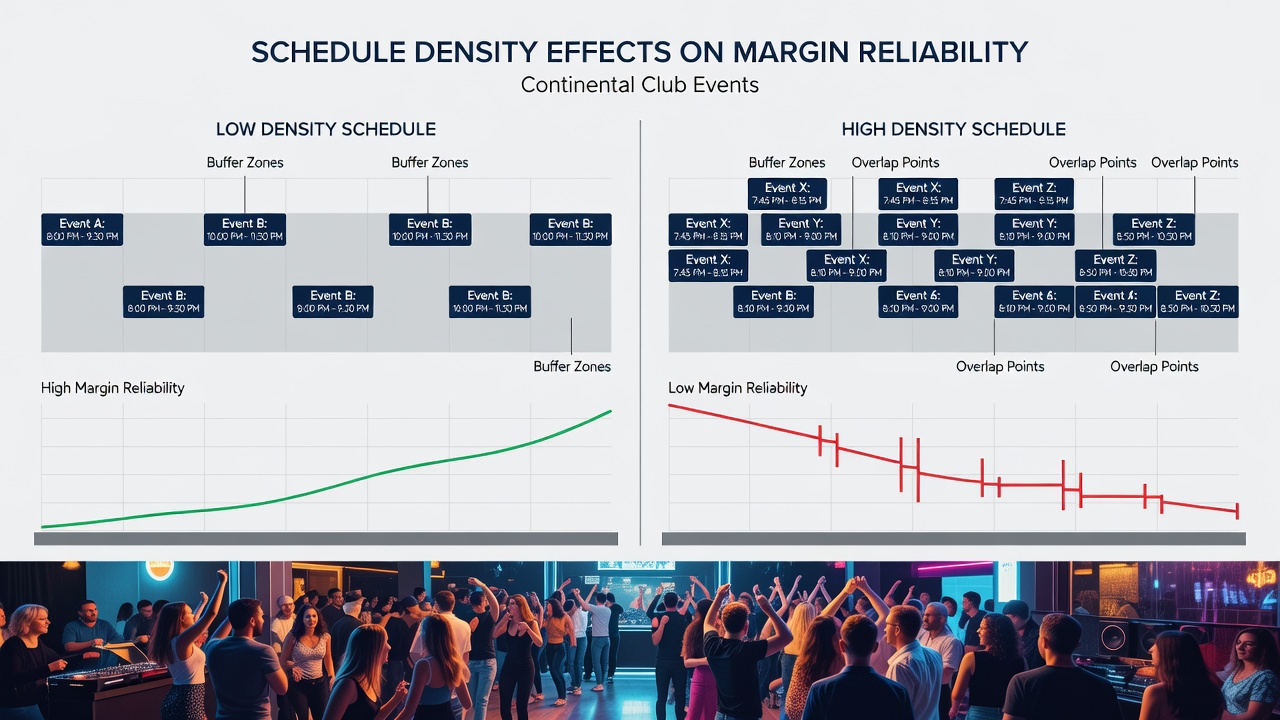
June 2026 presents a distinct scheduling environment because the FIFA World Cup begins that month in North America. Continental club competitions conclude their campaigns earlier than usual to accommodate national team preparations, compressing knockout rounds into late May and early June. This front-loading creates additional density for clubs still active in domestic title races or relegation battles, altering the normal rest patterns observed in non-World Cup years.
Regional Differences in Scheduling Impact
European club events benefit from denser flight networks and more standardized recovery protocols, yet the volume of matches remains high. Data compiled by the European Club Association shows that participants in both the Champions League and Europa League average 58 to 62 matches per season when domestic cups are included. South American schedules, by contrast, feature longer travel legs and fewer mid-season breaks, producing different fatigue signatures that analysts must account for when constructing margin models.
Asian and African confederation events add further layers. AFC Champions League participants often combine continental ties with domestic leagues that span multiple climate zones, while CAF Champions League clubs navigate variable pitch conditions and longer recovery times between away legs. These geographic factors create distinct variance profiles that affect margin reliability differently from European or South American contexts.
Statistical Adjustments in Margin Modeling
Advanced analytics teams incorporate schedule density metrics into regression models that forecast totals and spreads. Variables such as days since last match, cumulative travel distance, and number of rotated players receive weighted coefficients derived from historical datasets. When these inputs exceed defined thresholds, models widen confidence intervals around projected margins, reflecting the increased uncertainty documented in congested periods.
Real-time monitoring during the 2025-26 season illustrated these adjustments in action. Clubs reaching the knockout stages of multiple continental tournaments displayed greater result volatility in domestic fixtures immediately afterward, prompting oddsmakers to recalibrate lines for subsequent matches. The recalibrations aligned with observed increases in draw frequency and unexpected high-scoring outcomes.
Conclusion
Schedule density in continental club events introduces measurable variability into performance outcomes that directly influences margin reliability. Clubs navigating overlapping domestic and international commitments experience wider result distributions, prompting statistical models to adjust confidence bands accordingly. Data gathered across UEFA, CONMEBOL, and AFC competitions demonstrates consistent patterns linking fixture congestion with reduced predictive stability, while the compressed calendar around the 2026 World Cup adds another layer of scheduling pressure. Analysts and data providers continue refining inputs that capture rest, travel, and rotation effects to maintain accurate projections under these demanding conditions.