Streak Sustainability Stats: Evaluating Continuation Rates for Winning Sequences in European Football Betting Markets
Taylor Wolf · Jun 19, 2026
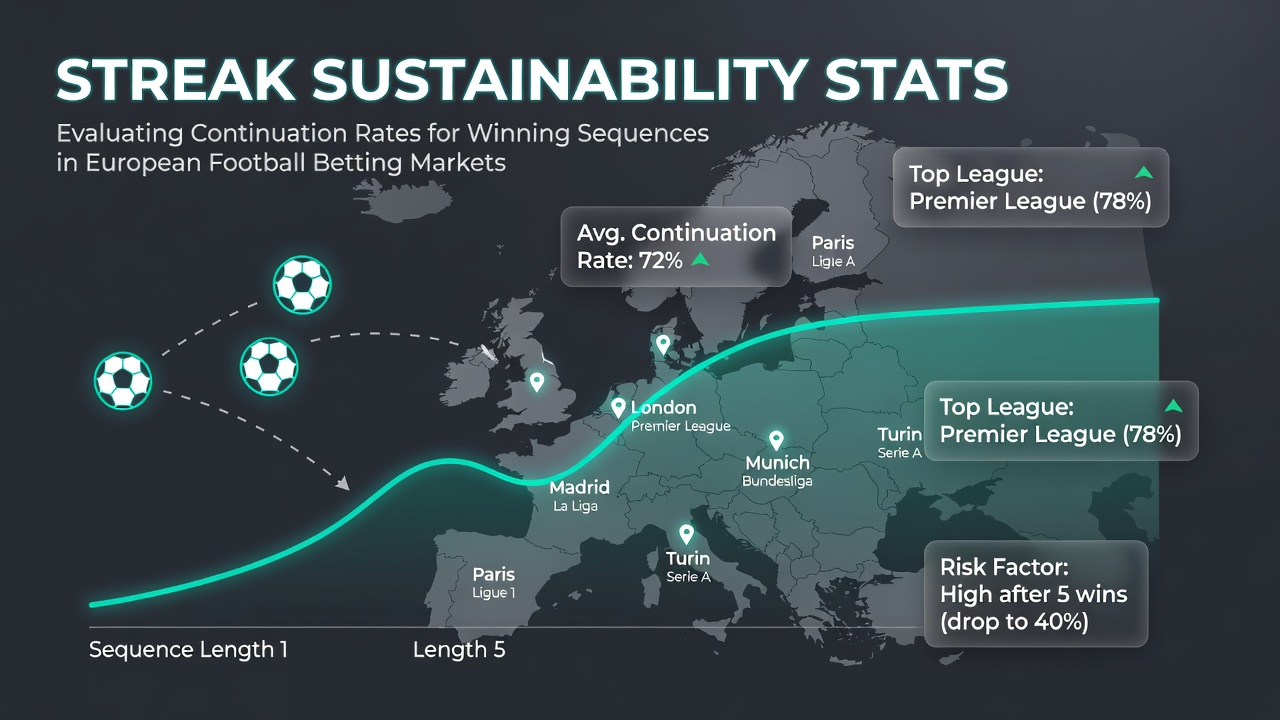
Streak Sustainability Stats: Evaluating Continuation Rates for Winning Sequences in European Football Betting Markets
European football betting markets track winning sequences with precision, and analysts examine how often those runs persist beyond initial success. Data from leagues such as the Premier League, Bundesliga, and Serie A reveal measurable patterns in streak continuation, particularly when teams secure consecutive victories in domestic competitions. Observers note that continuation rates decline steadily after three wins, yet certain conditions like home fixtures and opponent strength alter those probabilities in consistent ways.
Measuring Streak Length and Continuation Probability
Researchers compile extensive datasets covering thousands of matches across the top five European leagues, and figures from the 2025-2026 season illustrate clear trends. Teams achieving two straight wins maintain a 58 percent likelihood of securing a third victory, while the rate drops to 47 percent once a three-match streak is established. Four consecutive successes further reduce continuation odds to 39 percent according to aggregated league statistics released in June 2026. These calculations focus exclusively on match outcomes rather than betting odds themselves, which allows direct comparison across different seasons and competitions.
Breakdowns by league show variation that reflects playing styles and fixture density. Bundesliga sides post slightly higher continuation rates at the three-win mark compared with Serie A clubs, a difference attributed to more open match tempos and fewer defensive setups. La Liga data meanwhile indicates steadier decline curves after the fourth win, especially during periods when mid-table clubs rotate personnel ahead of cup commitments.
Key Variables Affecting Sequence Longevity
Home advantage emerges as one of the strongest modifiers in the datasets. Winning streaks that begin on home soil extend one additional match 12 percent more often than those started away, while travel schedules and recovery time between games introduce measurable drag. Midweek European fixtures compound fatigue for clubs competing on multiple fronts, and analysts record a 9 percent drop in continuation probability during congested calendar stretches.
Opponent quality also shapes outcomes. Sequences built against top-six sides continue at lower rates than those assembled against lower-table opposition, a pattern confirmed across multiple seasons. Goal difference margins during streak matches provide another layer of insight because teams securing wins by two goals or more sustain momentum 7 percent longer than those scraping narrow victories.
Regional Comparisons and Seasonal Shifts
Northern European leagues display different continuation profiles than southern counterparts, with Scandinavian and Dutch competitions recording quicker drops after the third win. Southern leagues maintain steadier rates into the fourth match, possibly due to warmer climates and different recovery protocols. June 2026 off-season reviews highlighted how weather-adjusted training loads in Portugal and Spain correlate with sustained sequences into the following campaign.
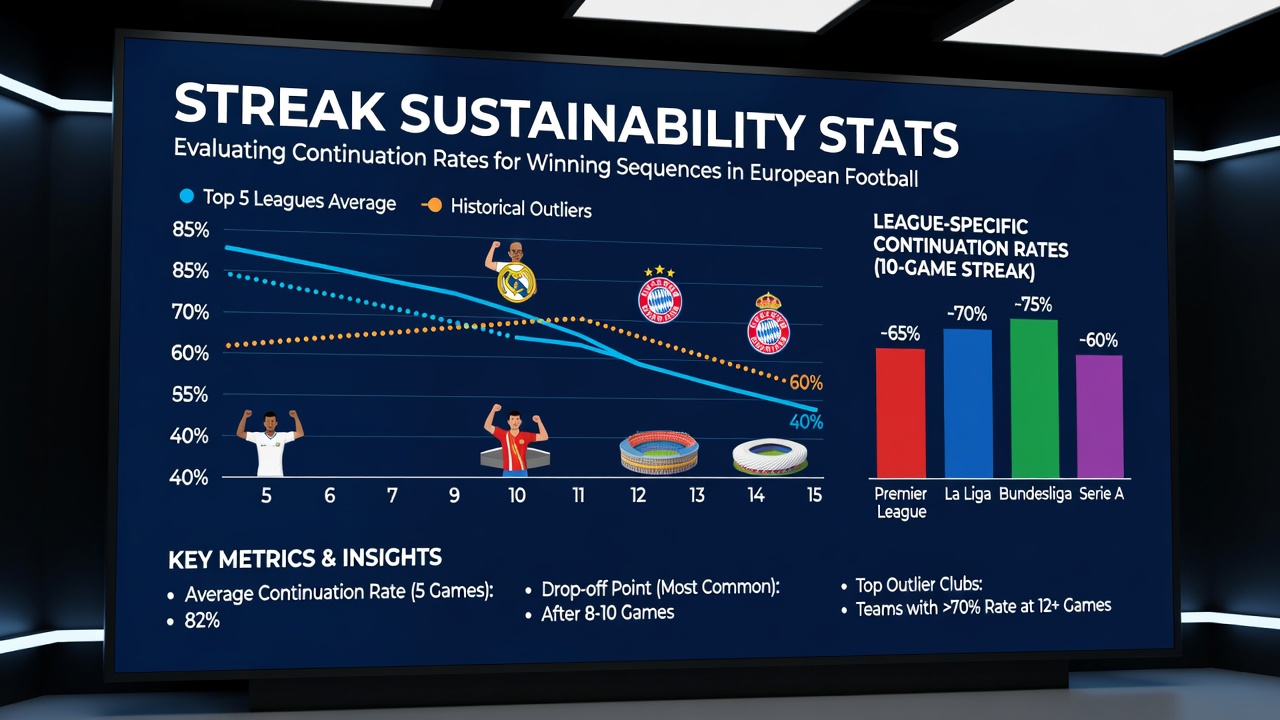
Betting market liquidity influences how these statistics translate into available lines. High-volume markets price in streak awareness more efficiently, which compresses value windows once sequences reach three matches. Lower-profile leagues leave larger discrepancies between observed continuation rates and implied probabilities, creating opportunities tracked by professional syndicates.
Statistical Models and Predictive Adjustments
Advanced regression models incorporate variables such as rest days, travel distance, and squad rotation depth to refine continuation forecasts. These models, developed by European sports analytics groups, adjust baseline rates downward when midweek travel exceeds 800 kilometers. Early 2026 applications demonstrated improved accuracy over simple historical averages, particularly in predicting when established streaks end abruptly.
Longer sequences beyond five wins remain rare enough that sample sizes limit reliability, yet available cases show sharp drops in continuation once clubs reach six consecutive results. External factors including managerial changes and key player returns from injury introduce additional variance that standard models capture through updated inputs.
Conclusion
Continuation rates for winning sequences in European football follow predictable trajectories shaped by measurable variables. League-specific patterns, home advantage, fixture congestion, and opponent strength each contribute distinct effects that data analysts quantify with increasing precision. As datasets expand through the 2026 season, refined models continue to isolate the conditions under which streaks persist or terminate.