Time Zone Transitions Altering Scoring Distributions in Cross-Country Basketball Matchups
Ellis Günther · Aug 16, 2026
Time Zone Transitions Altering Scoring Distributions in Cross-Country Basketball Matchups
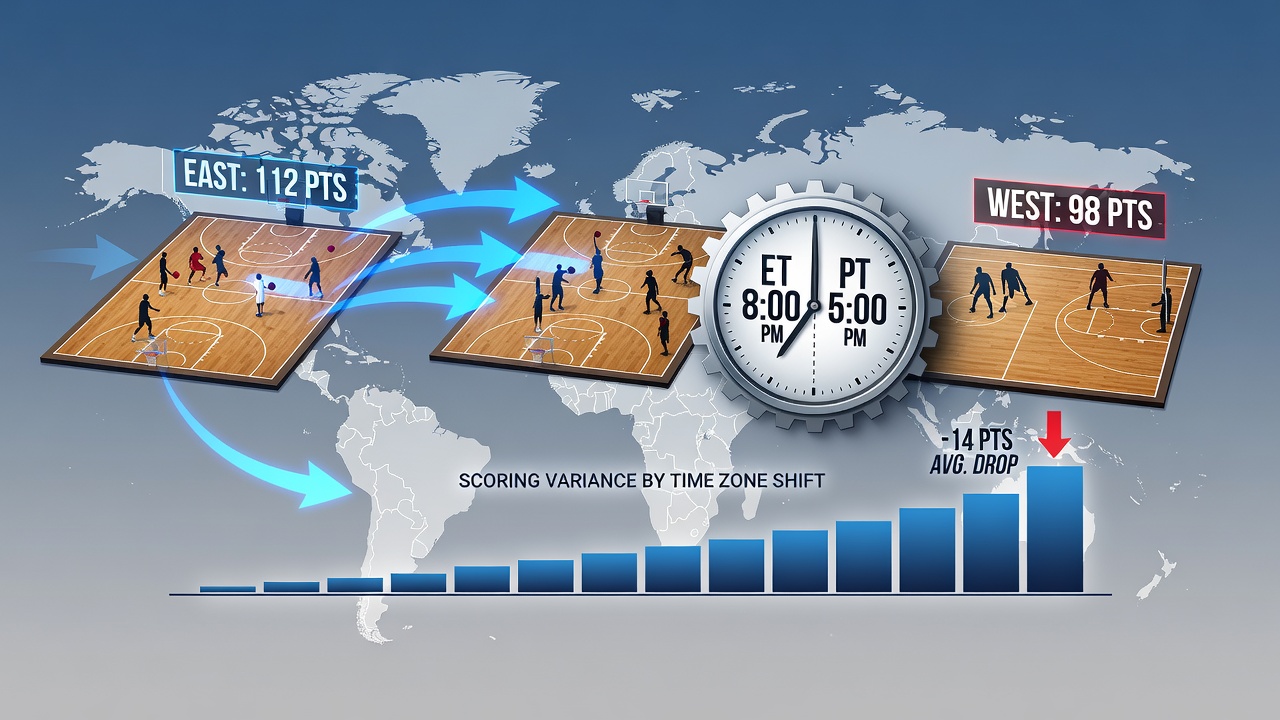
Cross-country basketball matchups introduce time zone transitions that reshape scoring distributions through measurable effects on player physiology and team execution, with researchers tracking these patterns across professional and collegiate levels for over a decade. Data from league records indicate that teams crossing three or more time zones experience shifts in point totals, particularly in early quarters, where average outputs drop by margins ranging from four to eight points per game compared to intra-zone contests. Observers note these changes arise because circadian rhythms adjust slowly, typically requiring one day per hour of time difference, and this lag influences shooting accuracy, defensive positioning, and rebounding efficiency during initial periods of play.
Circadian Disruption and Early Game Metrics
Studies conducted by sports science groups reveal that eastward travel produces more pronounced effects than westward journeys because the body clock advances against natural tendencies, leading to reduced alertness during evening tip-offs. In games involving Pacific to Eastern time zone flights, visiting teams post field goal percentages that fall 3.2 percent below their season averages in the opening 12 minutes, while turnovers rise by an average of 1.8 per contest according to compiled play-by-play archives. Westward shifts, although milder, still correlate with elevated three-point attempt rates after halftime as squads attempt to compensate through perimeter volume rather than interior scoring. These distributions appear consistently in datasets spanning multiple seasons, including observations from August 2026 exhibition schedules where several coastal squads logged preliminary results that aligned with prior travel models.
Statistical Patterns Across Leagues
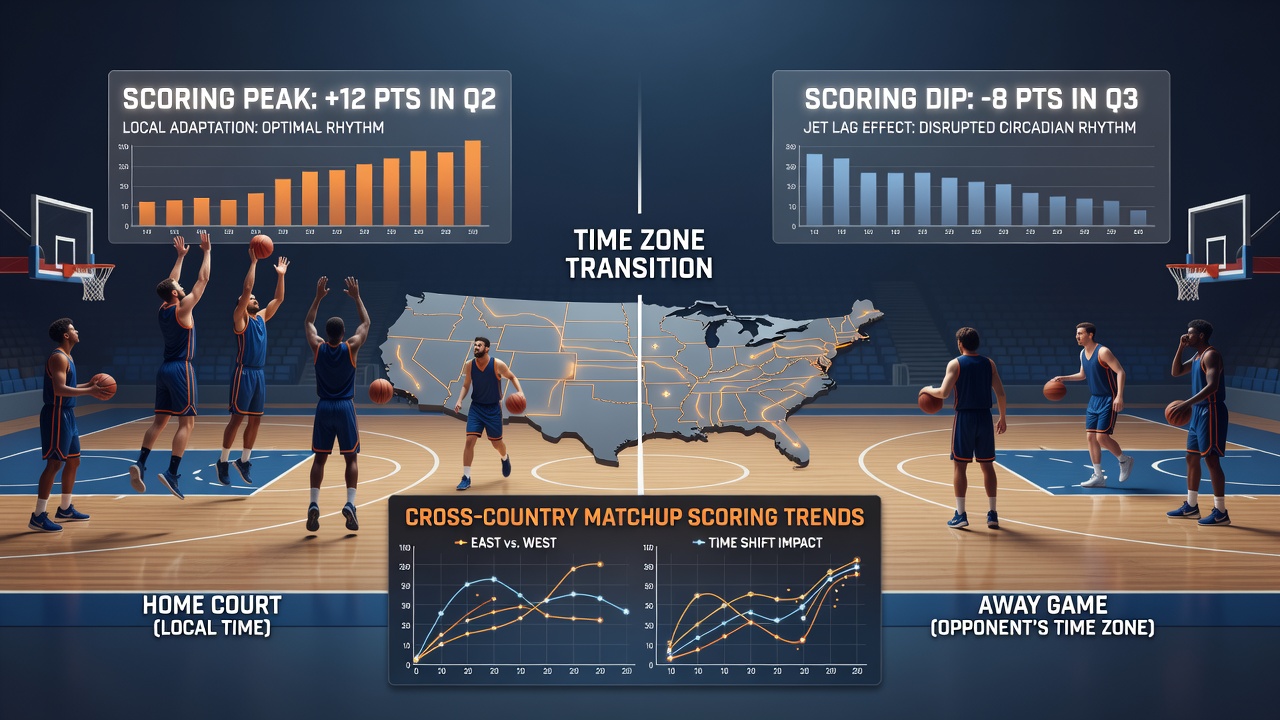
National Collegiate Athletic Association tracking systems show conference games spanning multiple zones produce total point outputs that vary by an average of 7.4 points when compared to same-zone matchups, with under distributions appearing more frequently in the first half. Professional leagues exhibit similar trends, though roster depth sometimes mitigates the impact after the third quarter as fresh substitutions stabilize execution. One analysis of regular season logs found that teams arriving the day before tip-off still recorded defensive rating declines of 4.1 points per 100 possessions during teh initial 24 minutes, whereas squads granted an extra rest day narrowed that gap to 1.9 points. Such figures emerge from aggregated box scores rather than isolated incidents, and they hold across both conference and non-conference schedules.
Travel Logistics and Recovery Variables
League travel protocols influence how these distributions manifest, since flight schedules, arrival times, and hotel acclimation periods interact with zone changes. Teams that depart immediately after morning practices often encounter compressed recovery windows, resulting in lower assist-to-turnover ratios during the first half of away contests. Research from the National Institutes of Health on sleep displacement supports these observations by documenting hormonal shifts that affect reaction times and decision-making under fatigue. In contrast, organizations that incorporate light exposure therapy or adjusted meal timing report narrower gaps in scoring margins, though complete normalization rarely occurs within 48 hours of arrival. Canadian university programs have documented parallel outcomes through Sport Canada funded studies, where eastward flights across the country produced comparable first-half scoring reductions in interprovincial tournaments.
Seasonal and Venue-Specific Observations
August 2026 schedules highlighted several instances where pre-season cross-country games deviated from expected totals, particularly when venues in high-altitude or coastal regions compounded time zone strain. Scoring in those matchups clustered around lower second-quarter outputs, with teams averaging 18.6 points during that segment versus 22.3 points in baseline home games. Defensive rebounding percentages also declined slightly for traveling sides, creating second-chance opportunities that boosted home team efficiency ratings. These patterns repeat across datasets because the underlying physiological responses remain consistent regardless of venue, though arena lighting and crowd acoustics can amplify or dampen the visible effects on shot selection.
Conclusion
Time zone transitions continue to alter scoring distributions in cross-country basketball through documented physiological and logistical channels, with statistical records confirming shifts in point production, shooting efficiency, and turnover rates. League archives and independent research programs maintain detailed tracking of these variables, allowing performance models to incorporate travel distance and direction as predictive factors. As schedules expand across wider geographic ranges, the same data patterns persist in both collegiate and professional contexts, offering objective benchmarks for evaluating game outcomes under varying conditions.