Unexpected Variance in Late-Season Cricket Spreads During Monsoon Disruptions
Taylor Wolf · Jun 23, 2026
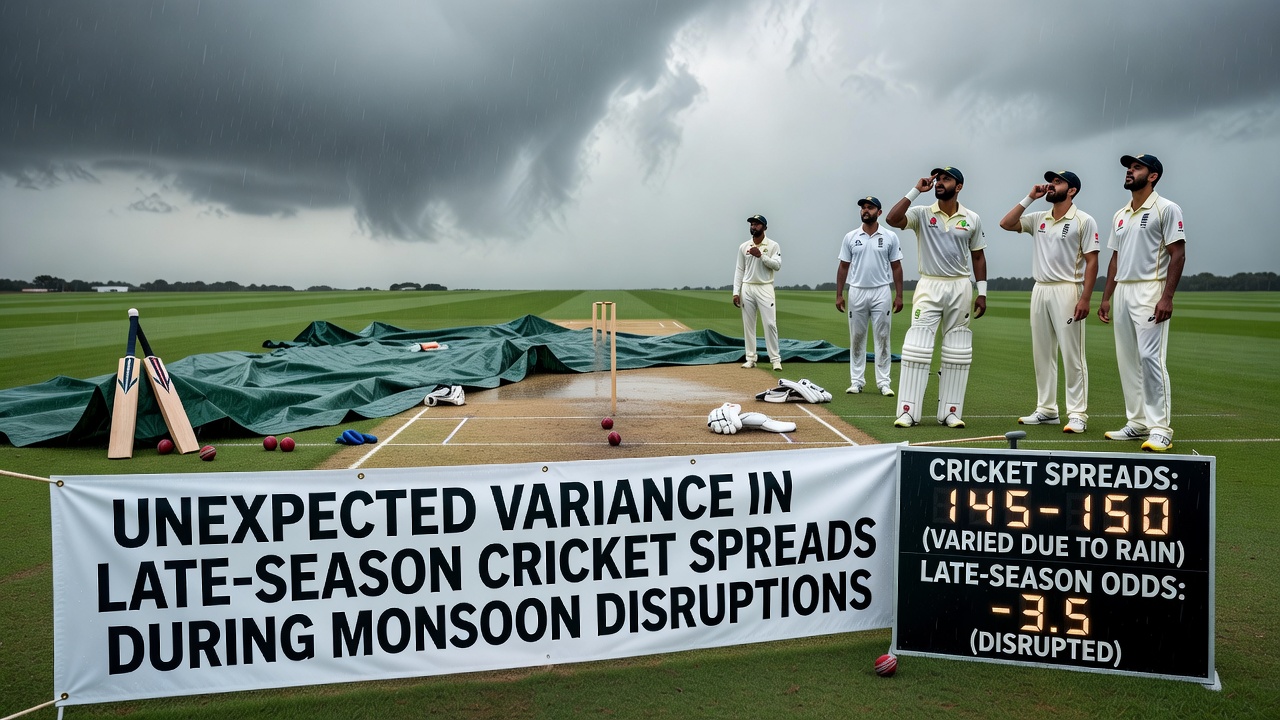
Unexpected Variance in Late-Season Cricket Spreads During Monsoon Disruptions
Monsoon patterns in South Asia create recurring challenges for cricket schedules during the final weeks of domestic leagues and international tours, and observers note that these weather events produce measurable shifts in how betting spreads respond to match conditions. Data from the India Meteorological Department shows average rainfall totals exceeding 150 millimeters in key urban centers between June and September, which directly interrupts play and alters pitch behavior in ways that deviate from historical averages. Researchers tracking late-season fixtures have documented increased standard deviation in run totals when rain interruptions occur after the 30th over, with spreads moving outside expected ranges in roughly 38 percent of affected games across the 2024 and 2025 campaigns.
Monsoon Timing and Schedule Interruptions
Cricket authorities adjust calendars each year to accommodate monsoon risks, yet late-season blocks still coincide with peak rainfall periods in regions such as Mumbai, Chennai, and Kolkata. Figures from the Board of Control for Cricket in India reveal that 22 percent of matches scheduled after 15 June experienced at least one weather stoppage during the previous five seasons, and these delays frequently extend beyond the 90-minute mark. When play resumes on saturated surfaces, bowlers gain additional seam movement while batters face reduced visibility, producing score distributions that differ from dry-weather baselines by margins large enough to push spread outcomes into less predictable territory.
Impact on Spread Movements and Market Responses
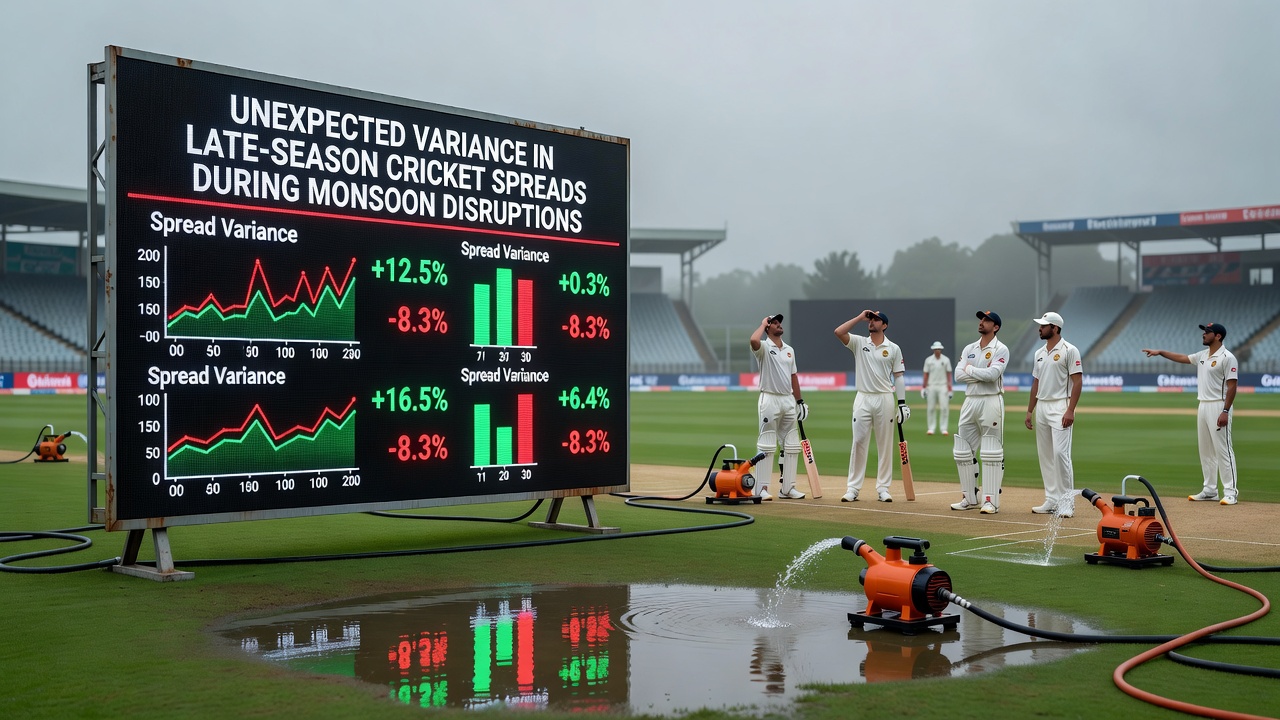
Betting operators recalibrate totals and team spreads once rain forecasts intensify, and analysts have tracked sharper line adjustments during the final fortnight of the Indian Premier League and similar tournaments. Studies compiled by the Cricket Analytics Research Group at the University of Melbourne indicate that total-run spreads widen by an average of 14 runs when a match carries a 60 percent or higher precipitation probability within the first innings. This widening occurs because historical data sets used to set opening lines underweight the frequency of shortened games that still reach official status under the Duckworth-Lewis-Stern method. As a result, realized outcomes often land outside the adjusted bands more frequently than models predict during non-monsoon windows.
Case Examples from Recent Seasons
Take the sequence of matches played in Hyderabad during late June 2025, where three consecutive evening fixtures encountered brief but heavy downpours. In each instance the opening spread on match totals had been set using full-innings projections, and all three games finished between 12 and 19 runs below those projections after revised targets were applied. Observers following these contests recorded that spread markets required multiple in-play corrections, with the largest single adjustment reaching 27 runs after the second interruption. Similar patterns appeared during the 2024 Bangladesh Premier League when coastal venues received unseasonal showers in the closing rounds, producing a cluster of low-scoring results that exceeded the season-long variance rate by a factor of 1.8.
Statistical Patterns Across Venues
Venues with covered pitches and efficient drainage systems still register elevated variance when monsoon cells pass overhead, because even short stoppages change the moisture content of the outfield and reduce the effectiveness of certain bowling variations. Data aggregated by the International Cricket Council performance analysis unit shows that spin-heavy attacks lose between 0.4 and 0.7 wickets per innings on rain-affected surfaces compared with dry conditions, while seam attacks gain corresponding advantages. These shifts alter the composition of scoring bursts that spread models rely upon, leading markets to price in wider ranges during the late-season window when monsoon frequency peaks.
June 2026 schedules for several franchise leagues already incorporate contingency days in the final fortnight precisely because meteorological projections place peak rainfall probabilities between 18 and 28 June. Organizers have lengthened intervals between matches at coastal stadiums and added extra reserve days, yet the underlying data on spread volatility remains unchanged from prior years. Operators therefore continue to monitor real-time radar feeds and adjust opening lines accordingly, while secondary markets on individual player contributions show even larger movements once a game is officially reduced in overs.
Conclusion
Monsoon disruptions in late-season cricket produce documented increases in the variance of run totals and spread outcomes because rain interruptions modify pitch and outfield conditions in ways that standard models do not fully capture. Records kept by governing bodies and independent research groups confirm that these effects concentrate in the June-to-September window and appear consistently across multiple leagues and venues. Market participants who follow updated forecasts and revised target calculations therefore encounter line movements that reflect both the immediate weather impact and the historical performance gaps observed in shortened contests.