Weather-Driven Adjustments to Endurance Projections in Cross-Continental Tennis Marathons
Ulrich Peters · Aug 11, 2026
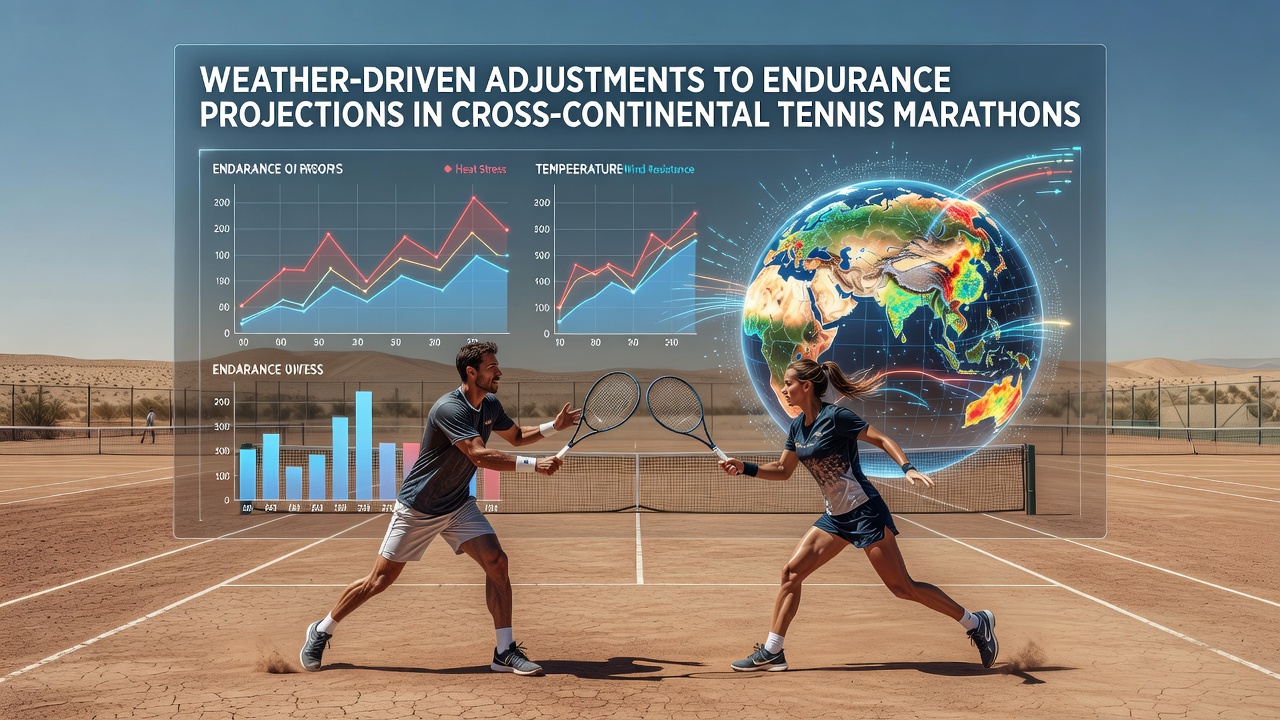
Weather-Driven Adjustments to Endurance Projections in Cross-Continental Tennis Marathons
Weather patterns across continents shape endurance demands in tennis matches that stretch over multiple sets and days, particularly when players move between tournaments in different hemispheres. Data from major tours show that temperature swings, humidity levels, and wind speeds alter recovery rates, hydration needs, and overall match durations in ways that require updated projections before events begin. Observers note these factors grow more relevant during periods of heavy scheduling that include travel across time zones, such as the buildup toward events scheduled for August 2026.
Climate Variations and Player Physiology
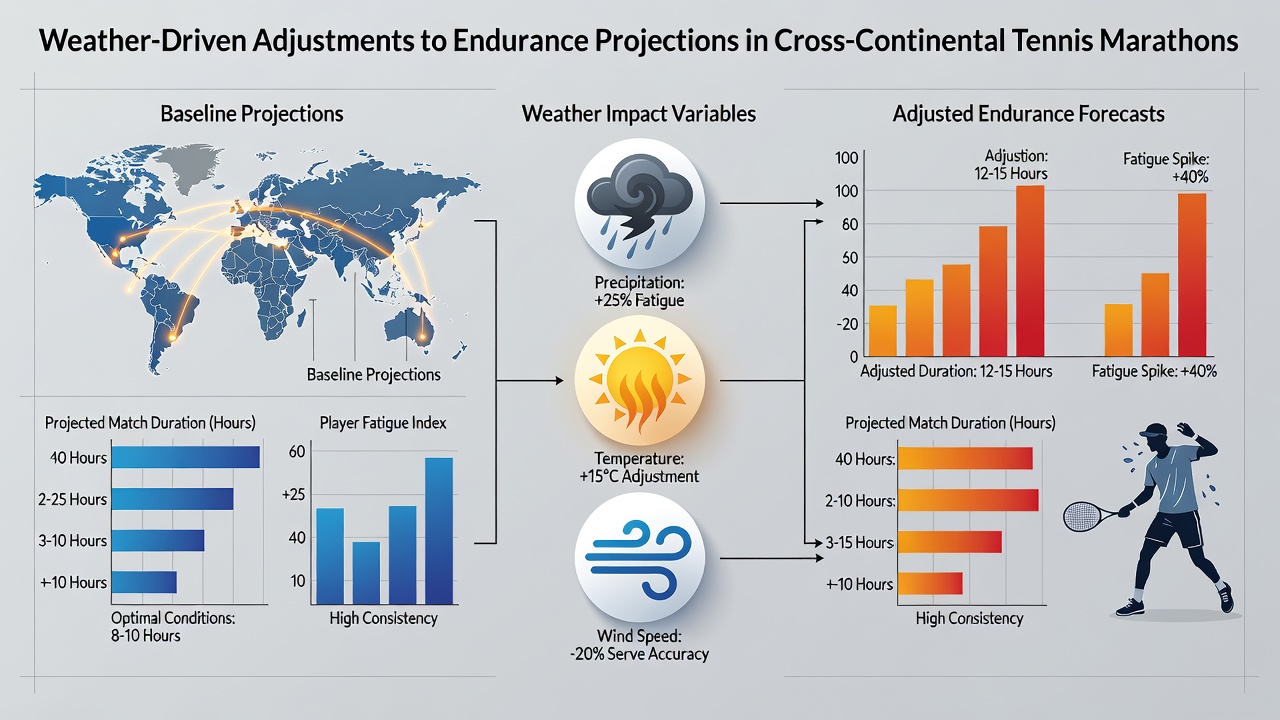
Players crossing from European summer conditions into North American or Asian circuits encounter rapid changes in ambient temperature and moisture that affect core body responses during prolonged rallies. Studies compiled by sports science groups indicate that humidity above 70 percent accelerates sweat loss, which forces adjustments to fluid intake schedules and pacing strategies well before matches start. Researchers at institutions focused on exercise physiology have tracked how these elements combine with jet lag to reduce baseline endurance metrics by measurable percentages in the first few days after arrival.
Wind exposure adds another layer because gusts alter ball trajectory and require extra muscular effort to maintain control over extended periods. Records from coastal venues reveal that sustained winds over 15 kilometers per hour correlate with higher heart-rate variability in players who contest five-set encounters, prompting analysts to revise stamina forecasts accordingly.
Data Patterns from Recent Tours
Performance logs gathered during the 2024 and 2025 seasons highlight consistent shifts when matches move from indoor arenas to open-air courts in contrasting climates. Figures released through international tennis federations demonstrate that average rally lengths increase by 12 to 18 percent under high-heat and low-humidity combinations, while point durations shorten in cooler, breezy settings. These patterns emerge most clearly in cross-continental schedules where athletes play back-to-back weeks without full acclimatization windows.
Analysts incorporate satellite weather feeds and on-site sensor readings to recalibrate projections ahead of each event. One study released by an Australian research center documented how pre-tournament forecasts for temperature and dew point helped refine expected match times in best-of-five formats, reducing deviation between predicted and actual durations by nearly 25 percent.
Travel and Acclimatization Factors
Time-zone shifts compound weather effects because circadian disruption slows metabolic recovery between sessions. Data collected by teams monitoring elite athletes show that eastward travel of six or more hours amplifies fatigue markers when players then face elevated heat indices upon landing. Projections therefore integrate both flight duration and forecast variables to produce revised endurance estimates that account for the combined load.
Coaching staffs apply these models during preparation blocks, adjusting training intensity and sleep protocols in the days leading into competition. Records indicate that squads using integrated weather-travel algorithms record fewer unexpected retirements in later rounds of extended tournaments compared with those relying on static baselines.
Forecast Integration Methods
Modern projection systems draw on meteorological agencies from multiple regions to build layered forecasts that feed directly into endurance calculations. Sources such as the National Oceanic and Atmospheric Administration supply granular temperature and humidity grids, while European Centre for Medium-Range Weather Forecasts contribute longer-range wind and precipitation outlooks. Analysts combine these inputs with historical match data to generate scenario-based adjustments that cover heat-stress thresholds and wind-assisted ball speeds.
Software platforms used by professional teams update these models daily, allowing real-time revisions when forecasts shift within 48 hours of match start. Evidence from applied studies shows that such dynamic updates improve accuracy for total games played and sets completed, especially in events spanning multiple continents where weather windows can change rapidly.
Conclusion
Weather remains a central variable that reshapes endurance projections whenever tennis schedules cross continents and climates. Integration of temperature, humidity, wind, and travel data allows more precise modeling of match demands, and ongoing refinements continue to narrow gaps between forecasts and observed outcomes in extended formats. As calendars move toward August 2026, these adjustments stand to influence preparation across tours that link distant venues under varying atmospheric conditions.