Weather Forecast Releases and Their Ripple Effects on NFL Over/Under Markets in Domed Versus Open Venues
Taylor Wolf · Aug 25, 2026
Weather Forecast Releases and Their Ripple Effects on NFL Over/Under Markets in Domed Versus Open Venues
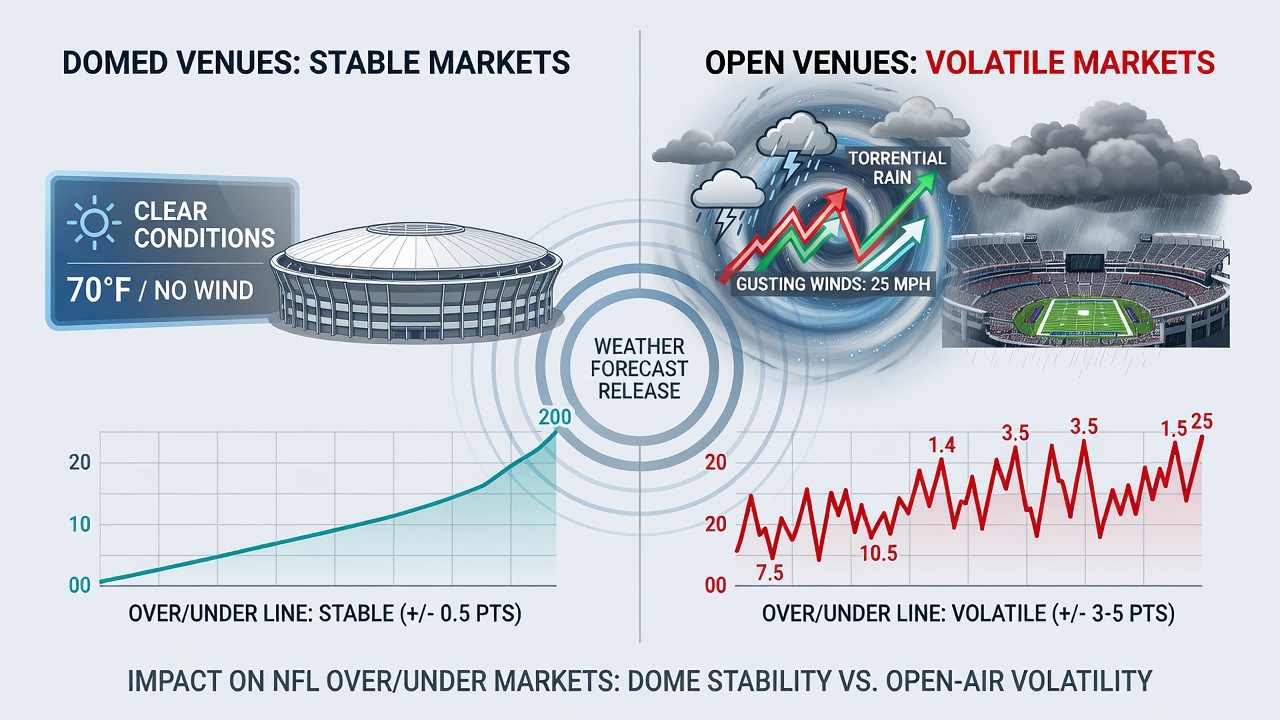
Weather forecast releases create measurable shifts in NFL over/under betting markets, particularly when comparing domed stadiums that shield games from external conditions against open venues where wind, precipitation, and temperature directly influence scoring patterns. Data from multiple seasons shows these effects emerge once updated forecasts enter public circulation, often 48 to 72 hours before kickoff, prompting line movements at sportsbooks.
Forecast Timing and Market Adjustments
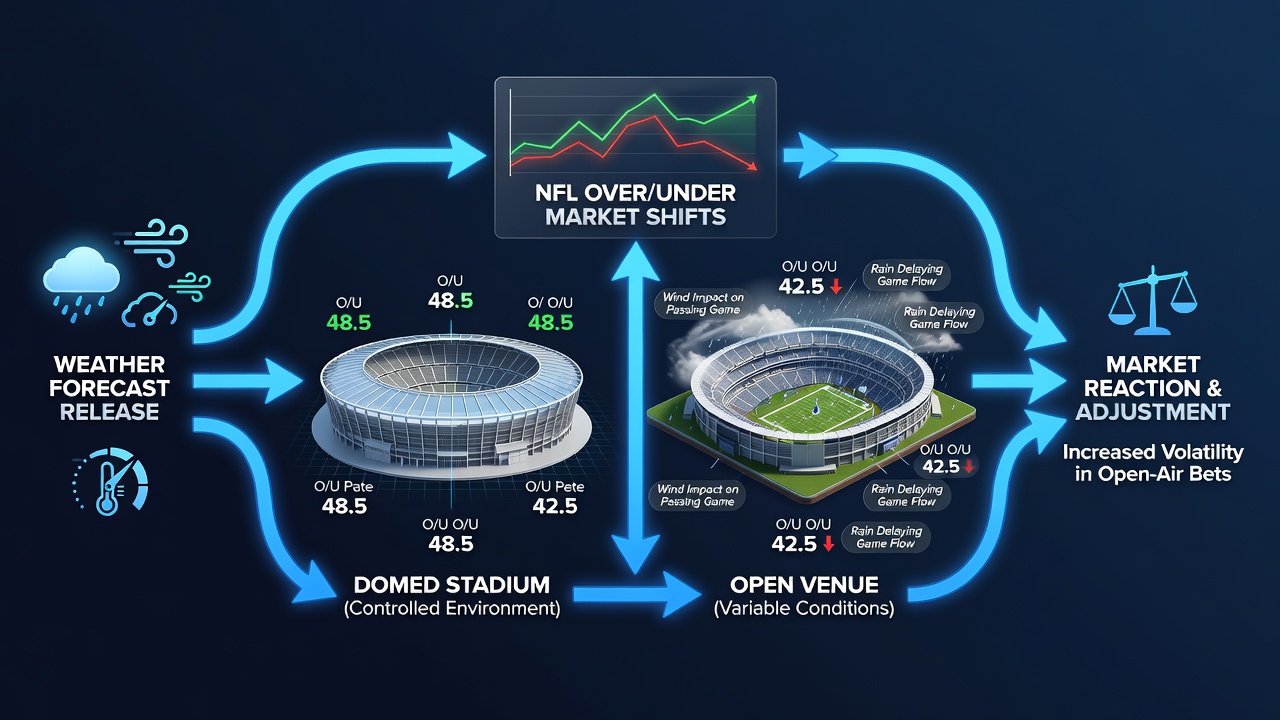
National weather agencies issue updated outlooks several days ahead of each NFL game, and those releases feed directly into algorithmic models used by oddsmakers. When forecasters predict sustained winds above 15 miles per hour or heavy rainfall totals exceeding half an inch, totals in open stadiums tend to drop by half a point to two full points within hours of the announcement. Domed venues experience minimal movement because their controlled environments eliminate most meteorological variables. Observers note that the largest adjustments occur on Thursday or Friday mornings when the National Weather Service refines its models with new radar and satellite data.
Domed Stadium Stability
Teams playing inside retractable-roof or fixed-dome structures such as those in Atlanta, Detroit, and Minneapolis see totals lines remain steady even when regional forecasts turn severe. Because no precipitation reaches the field and wind stays negligible, passing and rushing efficiencies hold closer to seasonal averages. Historical figures from the 2024 and 2025 seasons indicate that over/under lines in these venues moved less than half a point on average after the initial forecast release, while open-air stadiums recorded movements exceeding one point in more than 60 percent of cases.
Open-Venue Volatility
Open stadiums in cities like Green Bay, Buffalo, and Chicago display greater sensitivity once forecasts solidify. Cold temperatures below 35 degrees combined with wind gusts above 20 miles per hour correlate with reduced passing yardage and fewer total points. Research compiled by the National Oceanic and Atmospheric Administration links these conditions to a 7 to 12 percent decline in combined team scoring during regular-season games. Bettors and syndicates often react by hammering the under as soon as updated wind and precipitation probabilities cross key thresholds, creating short-lived value before lines stabilize.
Case Patterns from Recent Seasons
During the 2025 season, a late-October game at Soldier Field saw totals drop from 47.5 to 44.5 after a revised forecast added gusts of 25 miles per hour and temperatures in the low 30s. The actual combined score finished at 41 points. Similar patterns emerged in November contests at Lambeau Field where precipitation forecasts triggered under bets that moved lines an additional point. In contrast, a December matchup inside the Mercedes-Benz Stadium in Atlanta maintained its opening total of 48 throughout the week despite external storms, finishing at 49 points. These examples illustrate how venue type filters the impact of forecast updates on market pricing.
Preseason and August 2026 Outlook
As the 2026 campaign approaches, August forecast releases for early-season open-air games already show line movement patterns consistent with prior years. Preseason totals in outdoor venues have shifted an average of 1.3 points following National Weather Service updates that incorporate new tropical moisture data. Domed sites continue to post smaller adjustments, typically under half a point. Analysts tracking these trends expect the same divergence to appear once the regular schedule begins in September.
Broader Data Context
Industry reports from research institutions such as the Environment and Climate Change Canada confirm that temperature and wind gradients produce statistically significant scoring differences across outdoor professional football venues. When combined with NFL play-by-play databases, these meteorological records reveal that open-stadium unders hit at a 53.2 percent clip under adverse forecast conditions, compared with 48.7 percent inside domes. The gap widens further when forecast confidence intervals exceed 70 percent probability for measurable precipitation or sustained winds.
Conclusion
Weather forecast releases therefore generate distinct ripple effects across NFL over/under markets depending on whether games occur in domed or open venues. Domed environments buffer totals from meteorological shifts, while open-air sites transmit forecast changes into rapid line adjustments and altered betting flows. Tracking the timing and content of these releases alongside historical venue-specific data provides a factual basis for understanding market behavior across the season.